
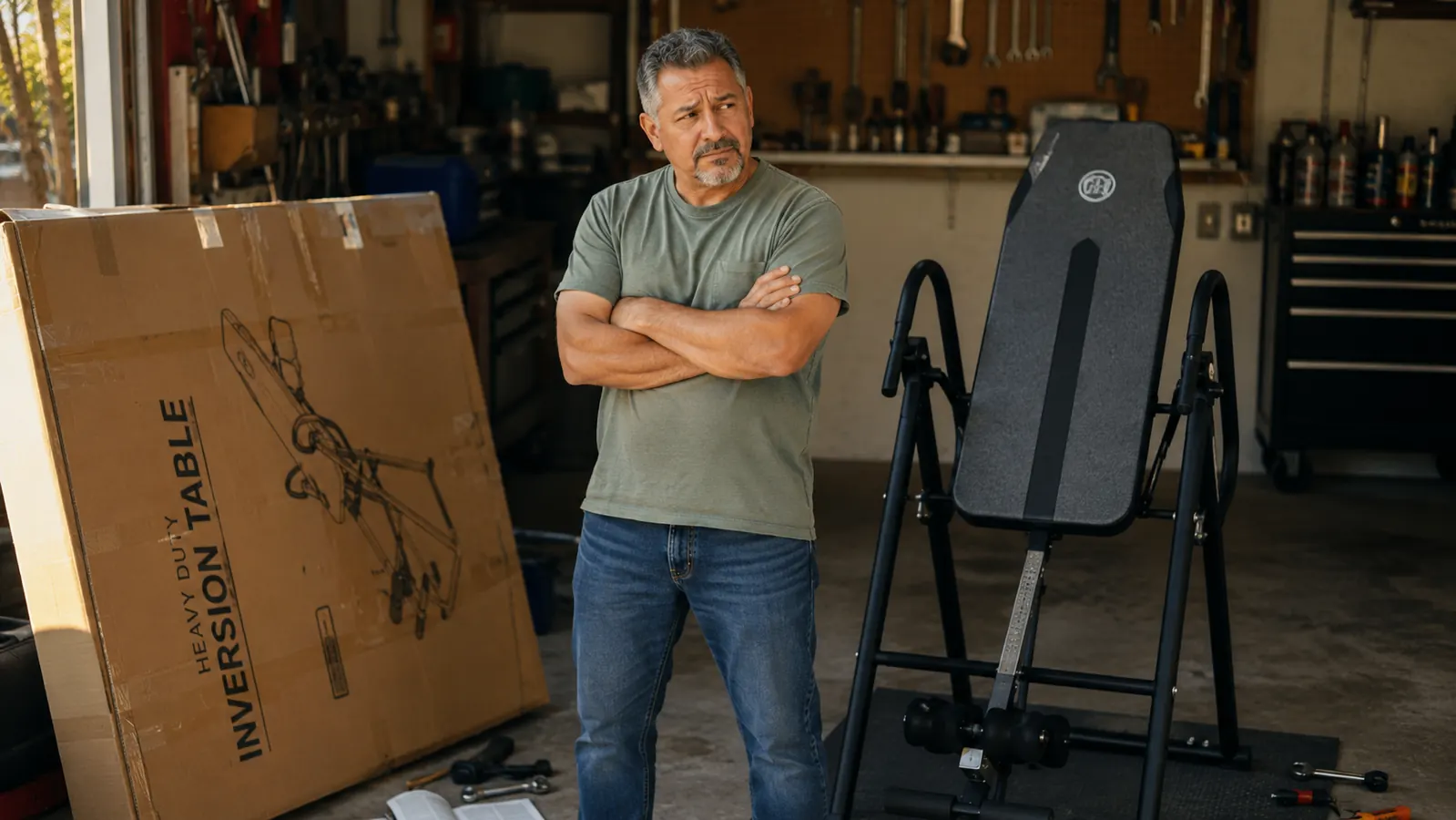
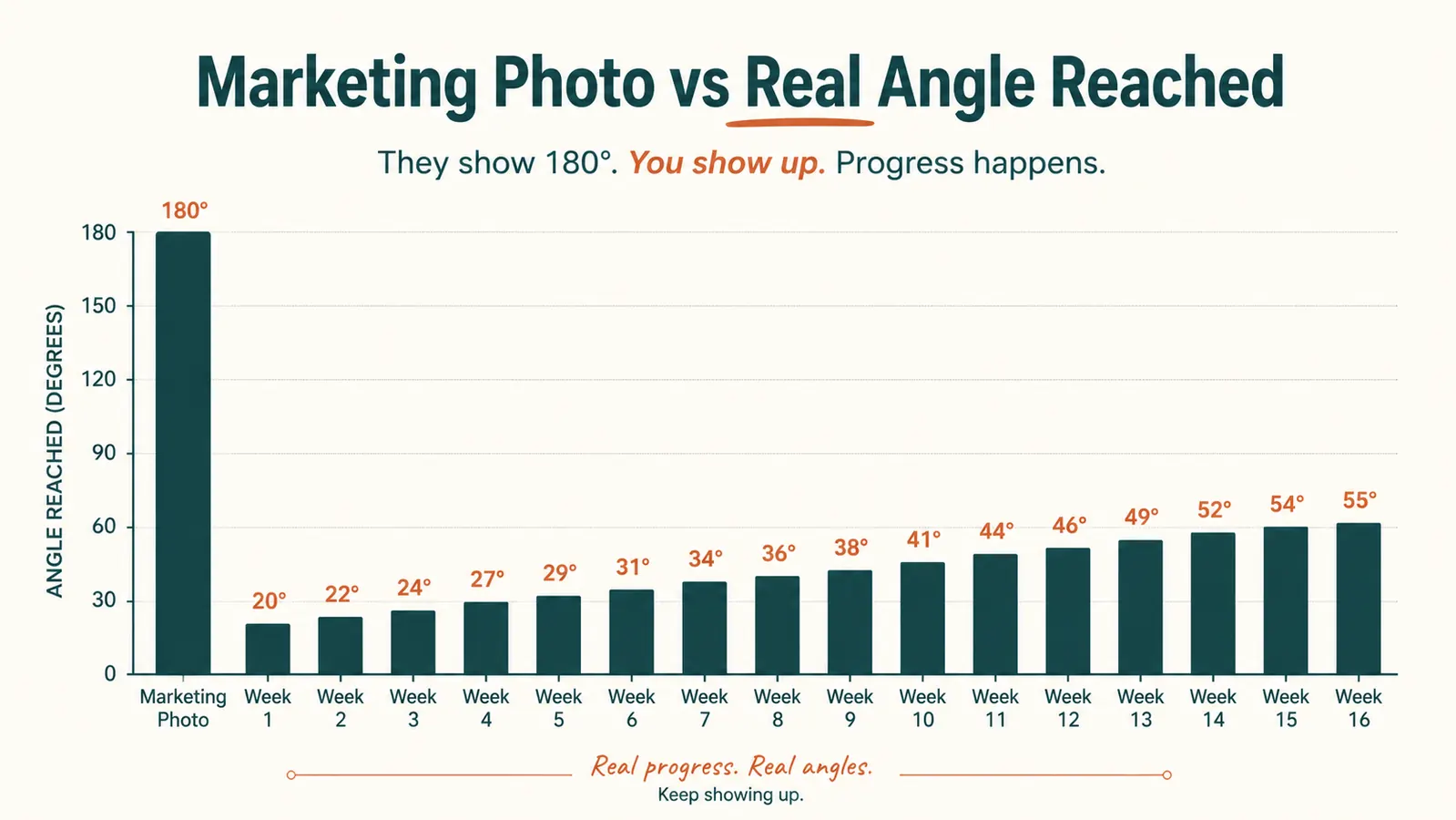
Every YOLEO photo online shows somebody hanging completely upside down, ankles locked, arms crossed over their chest like they're posing for a magazine cover. I want to tell you right now, sixteen weeks in, I have never once gone past about 55 degrees on my YOLEO, and I don't know anybody who uses one of these things that way regularly. That gap between the marketing and the real routine is the whole reason I'm writing this. I bought the YOLEO Gravity Inversion Table back in the spring after my knees and lower back started barking at me every morning before my shift, and I want to walk you through the parts of owning this thing that the listing photos and the five-star reviews conveniently skip.
I drive a city bus for a living, twenty-two years now, and I'm no stranger to buying a piece of equipment because a YouTube video made it look like a miracle, only to have it sit in the corner collecting dust three weeks later. So before you spend the money on a YOLEO, I want to give you the version nobody selling one is going to tell you, the setup hassles, what wore out faster than expected, and the honest timeline for when you'll actually feel a difference, if you feel one at all.
The Quick Verdict
A solid, budget-friendly YOLEO once you get past the ceiling clearance surprise and accept that the real routine looks nothing like the marketing photos.
Amazon Check Today's Price →Before You Buy One, Read What the Listing Doesn't Say
I'm not here to talk you out of the YOLEO, but I am going to tell you the parts that would've saved me a headache. If you want to see current pricing and the specs while you read, here's where I bought mine.
Amazon Check Today's Price on Amazon →What the Box Doesn't Tell You
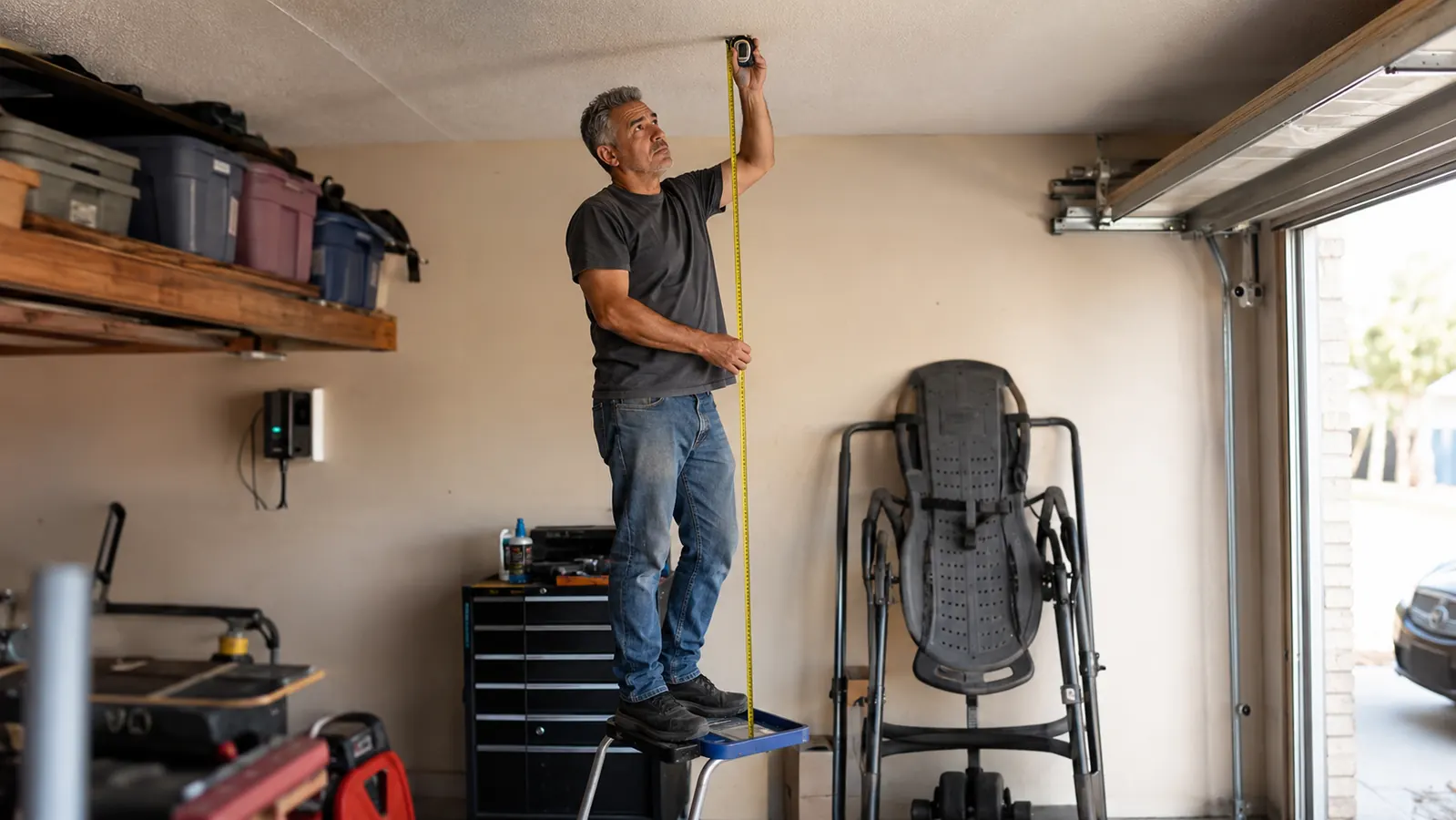
Nobody mentions ceiling height. I didn't either, until I unfolded my YOLEO in the garage and realized the light fixture directly overhead was about ten inches from where my feet would end up once I inverted past 40 degrees. I ended up moving the table three feet to the left, into a spot with a bare ceiling and no overhead light, before I ever locked my ankles in for the first time. If you've got a drop ceiling, a light fixture, ductwork, or anything hanging down in your intended spot, measure before you assemble the YOLEO, not after. This should honestly be on page one of the instructions and it isn't.
Nobody mentions the floor space you need beyond the table's footprint either. The YOLEO frame swings through a wide arc as you invert, and you need clear space in front of and behind it, not just the spot where it sits flat. I had a shop vac and a stack of paint cans a few feet away that I had to relocate after nearly clipping them mid-session. Give yourself a good six feet of clearance in every direction, more if you're taller than average.
And nobody mentions how loud the ratchet mechanism is the first dozen or so uses. It's not dangerous, it's just a mechanical clicking sound as the gears engage, but if you're setting the YOLEO up in a room next to a sleeping kid or a light-sleeping spouse, know that it announces itself. Mine has quieted down some with use, probably from the gears settling in, but it never went completely silent.
The First Few Sessions Are Rougher Than the Marketing Suggests
I went into this expecting maybe a little lightheadedness. What I got the first time on the YOLEO was closer to that stomach-drop feeling you get on a fast elevator, except it didn't stop after a second, it lingered the whole time I was tilted back. I only made it to about 20 degrees that first session and I still had to sit on the garage floor afterward with my head between my knees for a minute. That's not in any of the five-star reviews I read beforehand, and it probably should be, because if I hadn't already decided I was going to give it a fair shot, I'd have boxed it back up that same day.
It took me closer to five weeks, not two, before the sensation of being upside down stopped feeling like a threat and started feeling like a stretch. Your inner ear genuinely needs that long to recalibrate for some people, and if you're over 50 like I am, I wouldn't assume you'll adapt on the faster timeline some of the fitter YOLEO reviewers describe. Go slower than you think you need to. Nobody loses anything by taking six weeks instead of two to build up the angle.
There's also a strength component that surprised me. Getting yourself back upright from even a shallow invert takes real core and arm strength the first several tries, before your body learns the motion. I underestimated this badly. If you've got any kind of ab weakness or you're recovering from a hernia repair or abdominal surgery, this is worth bringing up with your doctor specifically before you ever strap into a YOLEO, not just the blood pressure question everyone talks about.
The "Easy Assembly" Claim Versus Reality
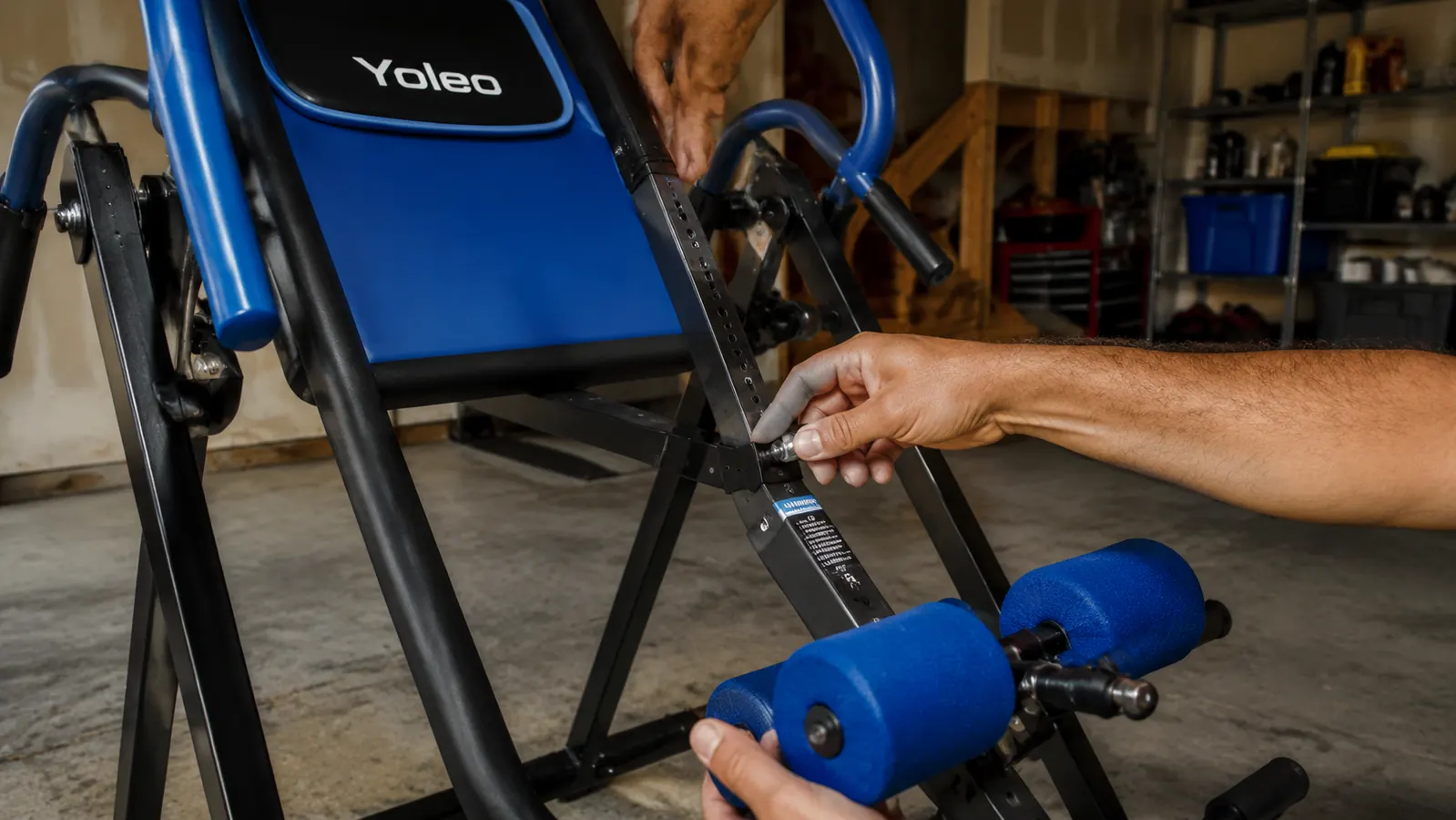
The listing photos make the YOLEO look like it snaps together in a few minutes, two clicks and you're done. That was not my experience. It took me an hour and forty minutes working alone with a Phillips screwdriver and an adjustable wrench, and a chunk of that time went to double-checking bolt tightness on the pivot points, which the instructions gloss over in a single line. If you've got a buddy free to hold the frame steady while you thread the bolts through, budget half that time. Solo, plan on the better part of an evening, not a coffee break.
When a Part Showed Up Missing
My hardware bag was short two of the smaller frame bolts, the kind that hold the backrest bracket in place. I nearly drove to the hardware store to buy substitutes before deciding to email YOLEO's seller support first instead. I got a reply within a day, and a small replacement hardware pack showed up by mail about a week later, no cost, no hassle, no back and forth arguing about whether it was really missing. It's not the kind of thing you want to happen, but if it does, at least know the company handled it without making me fight for it.
What Broke, Squeaked, or Needed Attention
At around week eight, I noticed a squeak coming from one of the pivot points near the base every time I shifted my weight. I pulled out my socket set, went bolt by bolt on the YOLEO frame, and found one of the bolts near the lower hinge had backed out maybe a quarter turn, probably from the repeated motion working it loose. Retightening it fixed the squeak completely, but it told me something worth knowing, check every bolt on this thing at the one-month mark, then again every couple of months after that. It's a fifteen-minute job and it's cheap insurance against something loosening while you're upside down.
The paint on the base rails near where my work boots rub against the frame getting on and off has started to chip in a couple of spots. Purely cosmetic, no rust yet since I keep the garage dry, but if you care about your YOLEO looking showroom-new after a year, know that it picks up wear marks in the high-contact areas.
One thing that hasn't given me a lick of trouble is the actual ankle lock ratchet, which is the part I was most nervous about when I first read up on the YOLEO. Sixty-some sessions in, it still clicks into place solidly every time and I've never had a moment of doubt about it holding. I'll give credit where it's due, that's the one component I expected to be the weak link and it's turned out to be the strongest part of the whole build.
What It Actually Fixed, and What It Didn't
Here's the part nobody selling you an inversion table wants to say plainly, the YOLEO did not fix my back. I still have the same underlying issue I had before, years of sitting behind the wheel and years before that hauling boxes on weekends caught up with my spine, and no piece of garage equipment reverses that. What changed is how my back behaves day to day. The tight, locked-up feeling I used to get most mornings shows up less often, maybe two mornings a week instead of five or six, and when it does show up it eases faster once I'm moving around.
It also didn't do anything for the ache in my right knee, which is a separate issue entirely and one I should've known better than to expect an inversion table to touch. If your pain is knee, hip, or shoulder related, the YOLEO isn't built for that and I'd steer your money elsewhere.
What surprised me is how much of the benefit seems tied to just taking ten minutes to lie still and breathe, upside down or not. I'm not saying the traction from the YOLEO isn't real, my doctor confirmed there's a mechanical decompression happening, but part of what's helping me is simply that I finally built in ten quiet minutes a few times a week where I'm not doing anything else, not scrolling my phone, not half-watching the news. Connie noticed that part before I did. She said I come inside from the garage calmer, not just looser.
The Price Question Nobody Answers Straight
Every YOLEO ad talks about how it's cheaper than chiropractic visits, and technically that's true, but it's a lazy comparison. A chiropractor is trained and licensed and can actually diagnose what's wrong with your specific spine. A YOLEO is a mechanical tool that applies gentle traction, nothing more. It's not a replacement for professional care if something is actually wrong, it's a maintenance tool for garden-variety tightness once you already know what you're dealing with. I'd tell anyone reading this to get a real diagnosis first, then decide if a YOLEO fits into the plan your doctor or physical therapist lays out.
That said, comparing it against the pricier tables on the market, the YOLEO earns its spot at the budget end. I looked hard at a couple of names that ran two to three times the cost before landing here, and I haven't felt shortchanged on build quality for what I paid. Where you notice the savings is in small details, the padding is a step down from the premium tables, and the instructions could use another proofread pass, but the core mechanism holding your body weight has performed exactly like it should.
What I Liked
- Ankle lock ratchet has been rock solid through 60-plus sessions, no slipping
- Price point is honest for what you get compared to premium tables
- Folds down small enough to lean against a garage wall
- Fewer stiff mornings once you push past the five or six week adjustment window
- Ten minutes of forced stillness turned out to have its own value beyond the stretch itself
Where It Falls Short
- Ceiling clearance and floor space needs are not mentioned anywhere in the listing
- First several sessions can trigger real dizziness, not just mild lightheadedness
- A frame bolt worked loose by week eight and needs a manual recheck routine
- Ratchet mechanism is noticeably loud for the first dozen or so uses
- Does nothing for pain outside the back, and won't fix the underlying spine issue on its own
Every photo shows somebody flipped all the way upside down. Sixteen weeks into owning a YOLEO, I've never gone past 55 degrees, and I don't need to.
Who This Is For
The YOLEO is worth the money if you've got a spot with real ceiling clearance and floor space, you're patient enough to give the adjustment period five or six weeks instead of expecting instant results, and your pain is specifically the lower back tightness that comes from sitting or standing all shift. It's also a smarter first step than jumping straight into a pricier table if you've never tried inversion before and just want to see whether decompression actually does anything for your particular back before spending more.
Who Should Skip It
Skip the YOLEO if your garage, basement, or spare room has anything hanging from the ceiling you can't move, or if you're the type who'll get frustrated by dizziness in week one and never touch it again. Skip it if your pain is mainly in your knees, hips, or shoulders, since it won't touch any of that. And skip it entirely without a doctor's sign-off first if you've got high blood pressure, glaucoma, a recent abdominal surgery, or heart issues. That conversation matters more than any review you'll read, mine included.
Sixteen Weeks In, Here's the Honest Verdict
It won't fix everything, and the setup has a few gotchas nobody mentions upfront. But once you clear the ceiling, tighten the bolts, and give the YOLEO six weeks, it earns its spot in the garage. Here's the exact table, current price included.
Amazon Check Today's Price on Amazon →