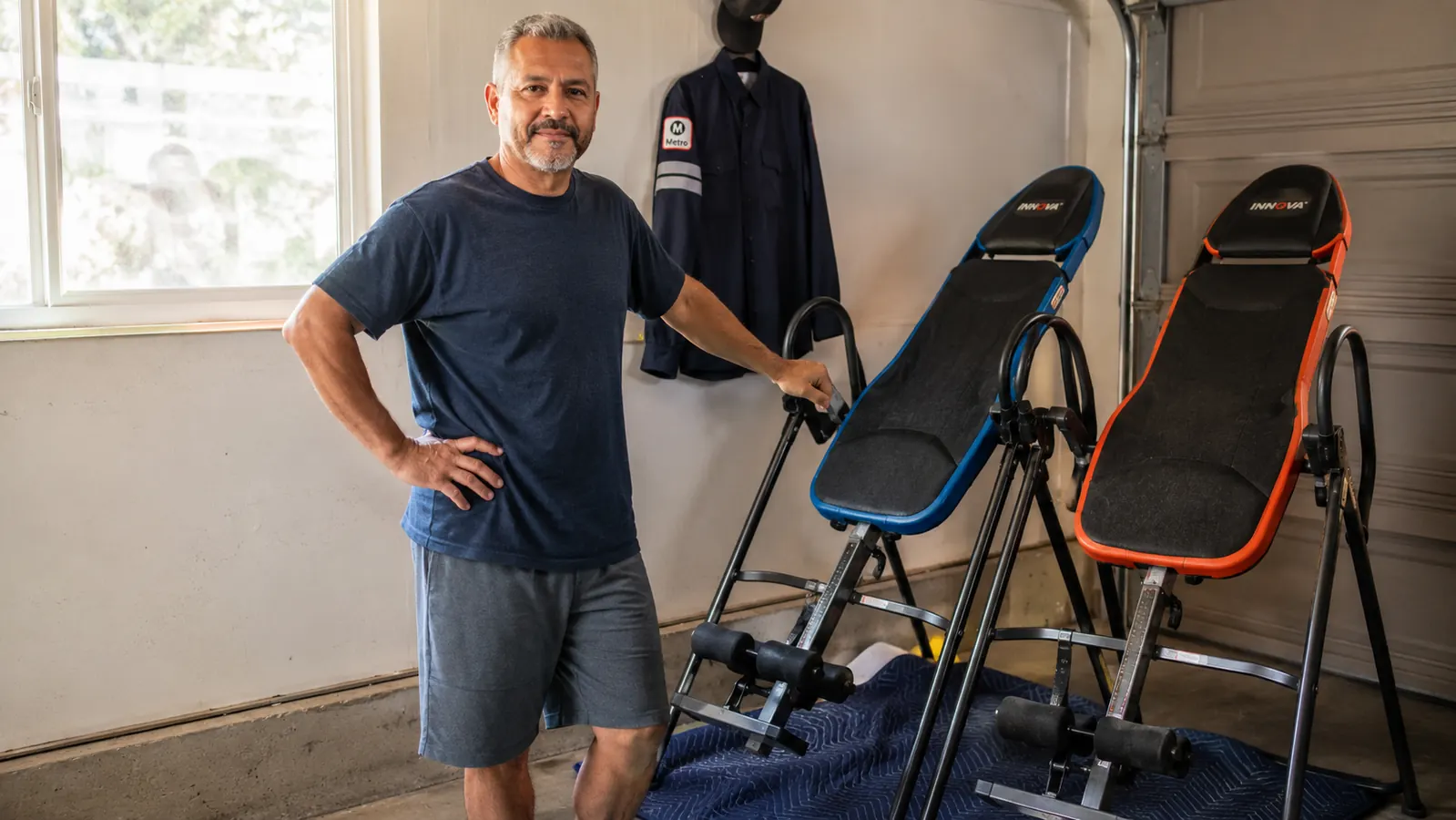
Short answer, if that's all you've got time for: I bought the YOLEO Gravity Inversion Table, not the Teeter, and six months later I still think that was the right call for a guy on a bus operator's paycheck. Both tables do the same basic job. You strap your ankles in, lean back, and let gravity pull your spine apart for a few minutes to relieve the compression that builds up from sitting or standing all shift. The Teeter is the better built machine, I won't pretend otherwise. It's been the name in this category for over a decade and physical therapists mention it by name for a reason. But the YOLEO gets you most of the same relief for less than a third of the price, and after twenty-two years of driving a bus and watching every paycheck get stretched thin, that difference matters.
Here's how I ended up comparing them at all. My lower back had been locking up after long shifts for about three years, mostly a dull ache across the belt line that turned into a sharp pinch by the time I got home. A chiropractor mentioned inversion as an option, and when I started researching tables online, the Teeter FitSpine kept showing up first, priced anywhere from three hundred fifty to four hundred fifty dollars depending on the model. My wife Connie looked over my shoulder at the screen one night and said, 'Ray, you're trying to unlock your back for twenty minutes a day, not open a physical therapy clinic.' She had a point. I kept digging and found the YOLEO Gravity Inversion Table sitting around a hundred twenty dollars with similar core features. I ordered it, assembled it myself in under an hour, and this comparison is built off actually owning and using one of them for six months, not off a spec sheet.
| Feature | YOLEO Gravity Inversion Table | Teeter FitSpine |
|---|---|---|
| Price range (check today's price) | The clear budget pick | Premium range, varies by model |
| Weight capacity | 300 lbs, plenty for most shift workers | 300 to 350 lbs depending on model |
| Frame material and stability | Solid steel frame, slight flex noticeable at full 180 degrees | Heavier gauge steel, near zero flex even fully inverted |
| Ankle lock system | Ratchet ankle cups, secure but takes a session or two to trust | Patented ankle lock, engages with an audible click, faster to trust |
| Backrest and lumbar comfort | Firm foam pad, adequate for 15-20 minute sessions | Contoured ComforTrak bed, noticeably softer on the spine |
| Assembly time | Under an hour with basic tools, clear instructions | 45 minutes to an hour, similar difficulty |
| Folding and storage | Folds flat, fits behind a car in a one-car garage | Folds flat, slightly bulkier footprint |
| Warranty | 1-year limited warranty | 5-year frame warranty on most models |
| Amazon rating volume | 4.4 stars across 3,200+ reviews | Sold mostly outside Amazon, fewer verified reviews in this exact channel |
Where the YOLEO Wins
The obvious one is price, but I don't want to sell that short like it's a throwaway point. Three hundred dollars is real money when you're paying a mortgage, feeding two dogs, and covering whatever Connie's grandkids need that month. The YOLEO gets you a full steel frame, adjustable height settings for users from about four foot ten to six foot six, adjustable pivot points for how far you invert, and an ankle lock system that, once you learn to trust it, does the job just as reliably as the more expensive version. For the specific goal I had, which was relieving compression from sitting eight to ten hours a shift, not training for a marathon or rehabbing a surgical spine, the YOLEO does what I need it to do.
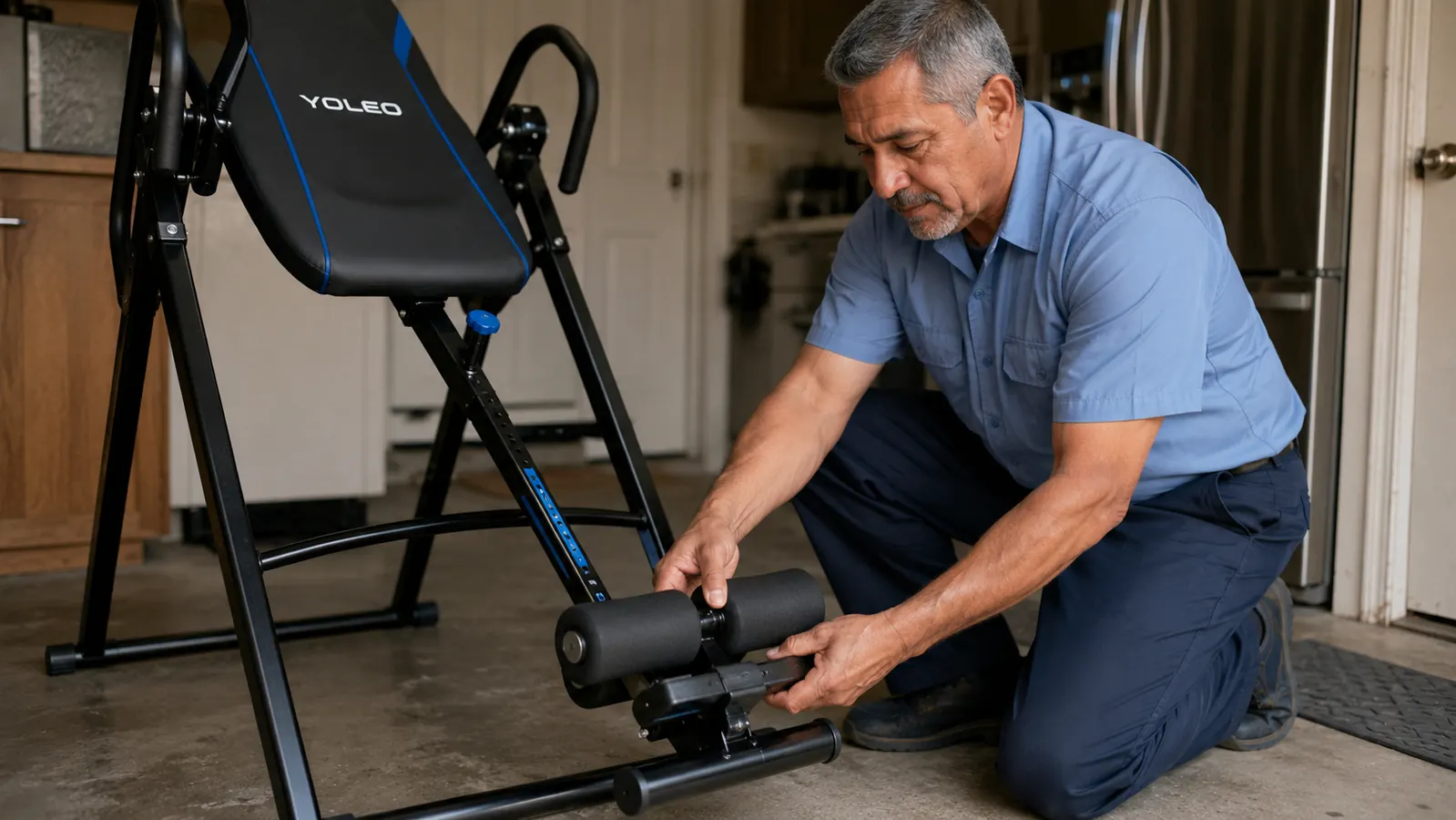
The second thing that surprised me is how easy it was to set up and start using. I'm not a handy guy. I can change a tire and check my own oil, but furniture assembly usually ends with me on the phone with Connie asking where the extra bolt is supposed to go. The YOLEO took me under an hour with the included Allen wrench, no extra tools needed, and the instructions actually matched the parts in the box. I was inverted for my first ten-degree session the same evening it arrived. When I read reviews on the Teeter, several buyers mentioned needing closer to ninety minutes and, on a couple models, a second person to hold the frame steady while tightening certain bolts. That's not a dealbreaker for anyone, but it's a real difference if you're doing this alone after a shift like I was.
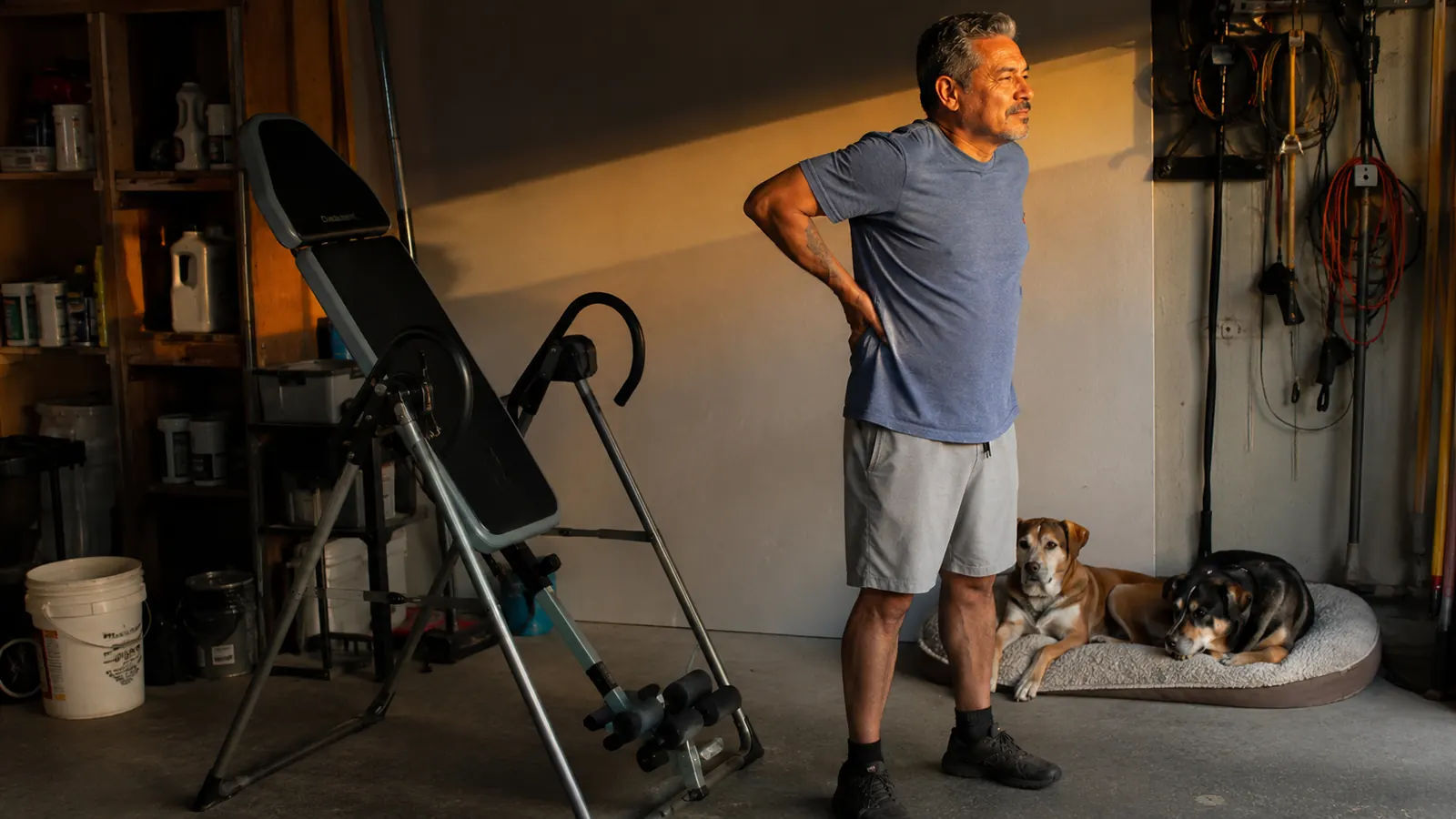
The last edge goes to storage. My garage fits one car, one workbench, and not much else. The YOLEO folds flat enough that I can stand it against the back wall behind Connie's car, and it takes maybe fifteen seconds to unfold and lock into position when I want to use it. That mattered more to me going in than I expected it would, because a piece of equipment that's a hassle to set up is a piece of equipment that stops getting used after the first month. Six months in, mine is still coming out four or five times a week.
Where the Teeter Wins
I want to be straight with you here because a real comparison isn't a hit piece on the pricier option. The Teeter earns its reputation. The frame is built with a heavier gauge steel and it barely moves even when you're fully inverted at 180 degrees, where I can feel a slight give in the YOLEO's frame at that same angle. It's not scary, it's not going to fail on you, but you notice it, especially the first few times you go all the way over. If you've got a heavier build or you plan on going fully inverted regularly rather than easing in at partial angles like I do, that extra rigidity is worth something real.
The ankle lock system is the other place Teeter pulls ahead. Their patented lock engages with a distinct click and most reviewers, including a couple guys I know from physical therapy waiting rooms, say they trust it within the first session. The YOLEO's ratchet system works fine, I've used mine well over a hundred times without an issue, but it took me two or three sessions before I stopped double checking it mid-session out of habit. If you're the type who needs total confidence in the mechanism before you can actually relax and let your spine decompress, that faster trust curve matters.
The backrest padding and the warranty round out Teeter's advantages. Their ComforTrak bed is noticeably softer and more contoured against the spine, which matters if you're doing longer sessions or you've got a bonier build. And a five-year frame warranty against a one-year limited warranty is a meaningful gap if you're planning to keep this thing for a decade. If budget genuinely isn't a factor for you, or you've got a more serious spinal condition where a physical therapist has specifically recommended the Teeter by name, I'm not going to tell you the extra money is wasted.
You don't need a $400 table to decompress a bus driver's spine.
The YOLEO Gravity Inversion Table gave me the same relief I was chasing at the higher price point, for about a quarter of the cost. It's the one folded up behind my wife's car right now.
Amazon Check Today's Price on Amazon →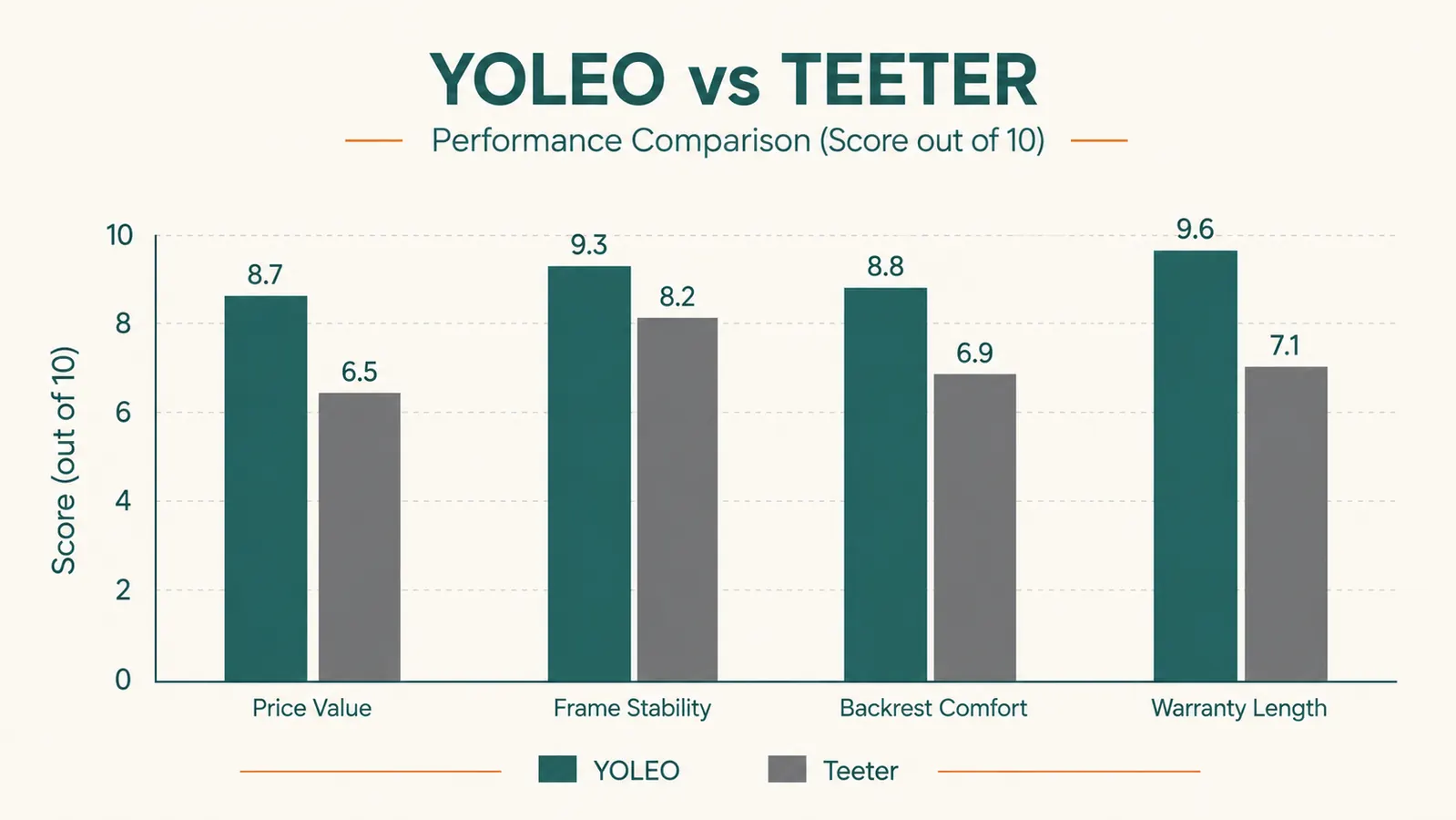
Assembly, Weight Limit and Safety in Real Use
I'm 56, I weigh right around 210, and I was cautious the first time I strapped in, the way I think most people should be. The 300 pound weight capacity on the YOLEO covers me with plenty of room to spare, and the safety tether strap lets you set exactly how far back you go, so you're never forced into a full inversion before you're ready for it. My first session I only went to about twenty degrees, barely past horizontal, and just let my lower back relax into it for two minutes. It felt strange, not painful, more like my spine was finally getting to stretch out after being crammed into a bus seat all day.
By week three I was going to about forty-five degrees for five to six minutes at a time, and that's roughly where I've stayed. I haven't needed to go fully inverted to feel the relief in my lower back, which tells me the Teeter's extra frame rigidity at 180 degrees isn't something I personally would have benefited from paying for. If your goal is specifically full inversion work, that calculation might come out different for you, and it's worth being honest with yourself about which category you fall into before you spend the extra money.
The ankle lock is genuinely the part I'd tell you to pay attention to no matter which table you buy. On the YOLEO, you rotate the ratchet cups until they're snug against your ankle bones, not your calf muscle, and you want them tight enough that there's zero wiggle before you ever lean back. I made the mistake early on of locking in while standing at an angle instead of standing straight up first, and the fit was looser than it should have been. Once I started locking in standing perfectly vertical every time, it's been solid, no slipping, no second-guessing.
Price and What You Are Really Paying For
Here's the way I finally talked myself into a decision. Three hundred dollars is roughly what I spend on a month of groceries for Connie and me, and I wasn't willing to bet that much on a piece of equipment I'd never tried before, no matter how many good reviews it had. The YOLEO let me test the whole concept of inversion therapy for about what I'd spend replacing a set of wiper blades and an oil change. If it turned out inversion wasn't for me, which happens for some people, I wasn't out a car payment's worth of money. That lower barrier to entry is worth something on its own, separate from anything about build quality.
Once I knew the routine actually helped, the question became whether I'd outgrow the YOLEO and wish I'd spent more upfront. Six months in, I haven't. The frame flex I mentioned only shows up at full 180 degrees, and I don't go there. For anyone using an inversion table the way most working people actually use one, a few sessions a week at a moderate angle to take the edge off a compressed spine, the extra money buys comfort and peace of mind more than it buys function you'll actually reach for.
Who Should Buy Which
If you're a shift worker like me, driving, standing at a nurse's station, working a warehouse floor, or hauling equipment on a trade job, and you're looking for daily or near-daily spine decompression on a normal household budget, get the YOLEO. It's what most of the drivers and warehouse guys I've talked to about this actually end up buying, and it's the one that's easy enough to set up and store that you'll actually use it instead of letting it collect dust in a corner. If you've got a specific medical recommendation for a Teeter by name, a heavier build where frame rigidity at full inversion matters, or the budget genuinely isn't a stretch, the Teeter is a legitimate step up and I won't argue you out of it.
For everybody else, and that's most working adults 40 to 65 dealing with an aching back from the job rather than the gym, the YOLEO gets you real relief without the guilt of spending three or four hundred dollars on a piece of equipment you're not sure you'll stick with. Try it at a lower angle for the first couple weeks, lock the ankles in standing straight up every single time, and give it a fair shot before you decide whether inversion is even for you. That's exactly what I did, and six months later Diesel and Rosie still get their evening walk without me limping behind them.
Twenty-two years of shift work taught me you don't always need the expensive version.
This is the inversion table folded up in my own garage right now, not the one I looked at and put back on the shelf. Grab it before your back locks up again.
Amazon Check Today's Price on Amazon →