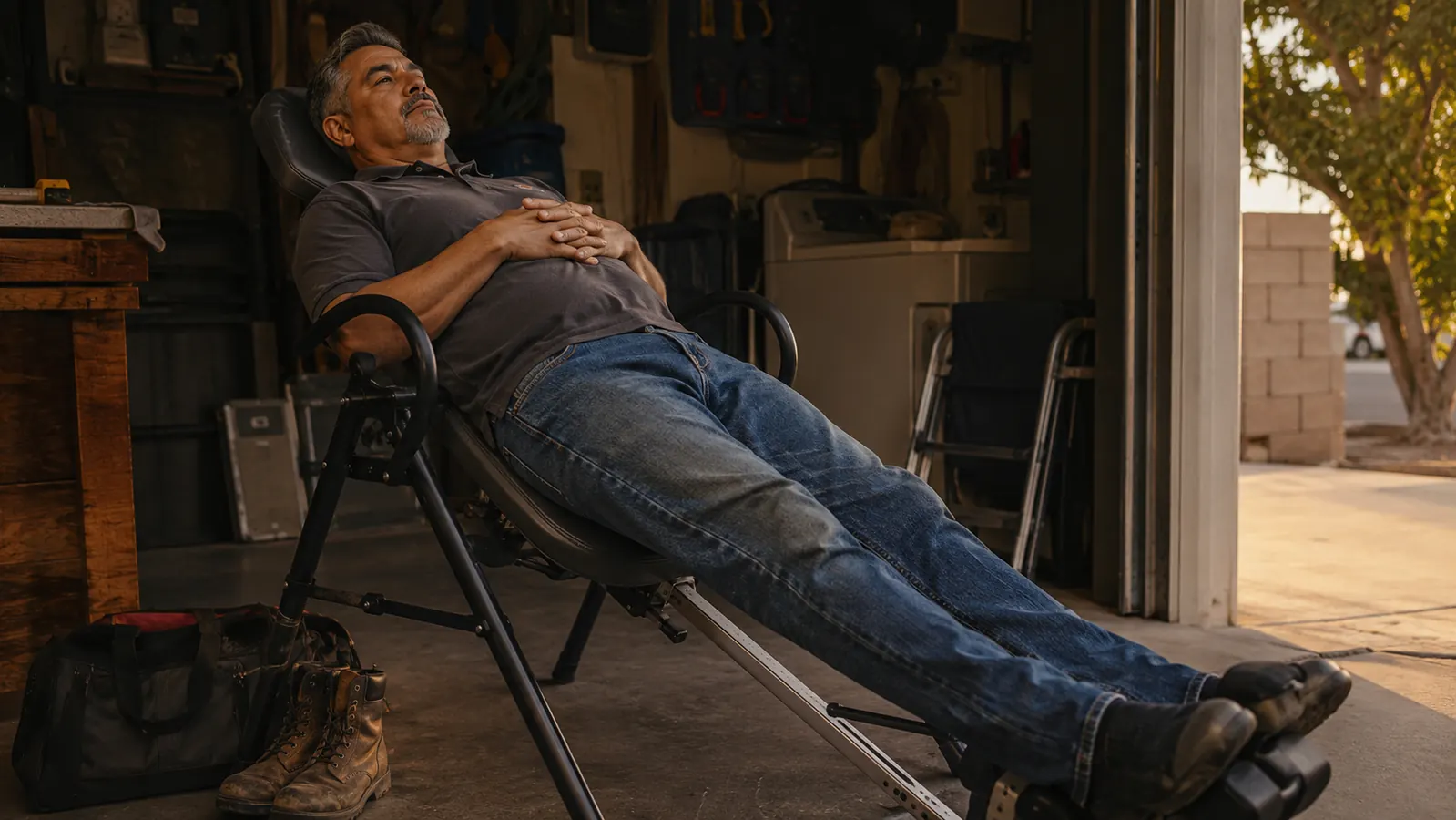
Twenty-two years behind the wheel of a city bus taught me exactly what a long shift does to a spine. By the end of a ten-hour route, my lower back felt like it had shrunk two inches, and climbing out of the driver's seat meant a slow, careful unfold instead of just standing up like a normal person. If you drive for a living, work a warehouse floor, or spend your shift on your feet lifting and twisting, you already know that feeling. Gravity and hours of compression squeeze the discs in your spine all day, and nothing about a normal shift ever asks them to decompress. That's the exact problem I bought a YOLEO inversion table to solve, and it's the same reason I still use it today, close to two years later.
This isn't a hype piece about hanging upside down like a bat and calling it recovery. It's a real, step-by-step routine I built specifically to decompress my spine after long shifts, using the YOLEO inversion table because it's the one I own and trust, but the order of these steps matters no matter which inversion table ends up in your garage. Do this in sequence, don't skip the safety step, and give it real weeks instead of a couple of tries before you decide whether it's working for you. My route was Route 14 out of the east depot, and I mention that only because the specific job doesn't matter nearly as much as the pattern behind it, hours of compression with no built-in relief.
Spine Feel Two Inches Shorter by the End of Your Shift?
The YOLEO inversion table is the exact one I use to decompress my spine after long shifts behind the wheel. Adjustable angle, locking ankle system, folds flat when you're done with it.
Amazon Check Today's Price on Amazon →Step 1: Get Cleared by Your Doctor Before You Invert
This step comes first because it matters more than the table itself. Inverting your body raises pressure in your eyes and shifts how your blood pressure behaves while you're upside down. If you have high blood pressure, heart disease, glaucoma, or any other eye condition, talk to your doctor before you ever get on an inversion table, YOLEO or otherwise. I know that sounds like the boring fine print nobody reads, but I asked my doctor directly before I bought mine, and she specifically wanted my blood pressure numbers before she gave me the go-ahead.
I'm not a doctor and this isn't medical advice, it's just what worked for me and what my doctor told me to watch for. If your pain comes with numbness, tingling down a leg, or anything that feels like nerve involvement, see a doctor before you try to decompress your spine on your own, not after. Once you're cleared, keep that conversation going. I mention the inversion table at my checkups so my doctor knows it's part of my routine, the same way I'd mention any other habit that affects my body regularly. She's the one who told me not to eat a big meal right before a session either, something I never would have thought about on my own.
If you're on blood pressure medication, ask specifically how inversion might interact with it, since some medications already lower blood pressure and being upside down changes it further on top of that. This isn't a step to rush through because you're excited to try the table. Take the appointment, ask the specific questions about your own numbers, and don't let a review online, including this one, be the thing that clears you medically.
Step 2: Set Up the YOLEO and Start at a Shallow Angle
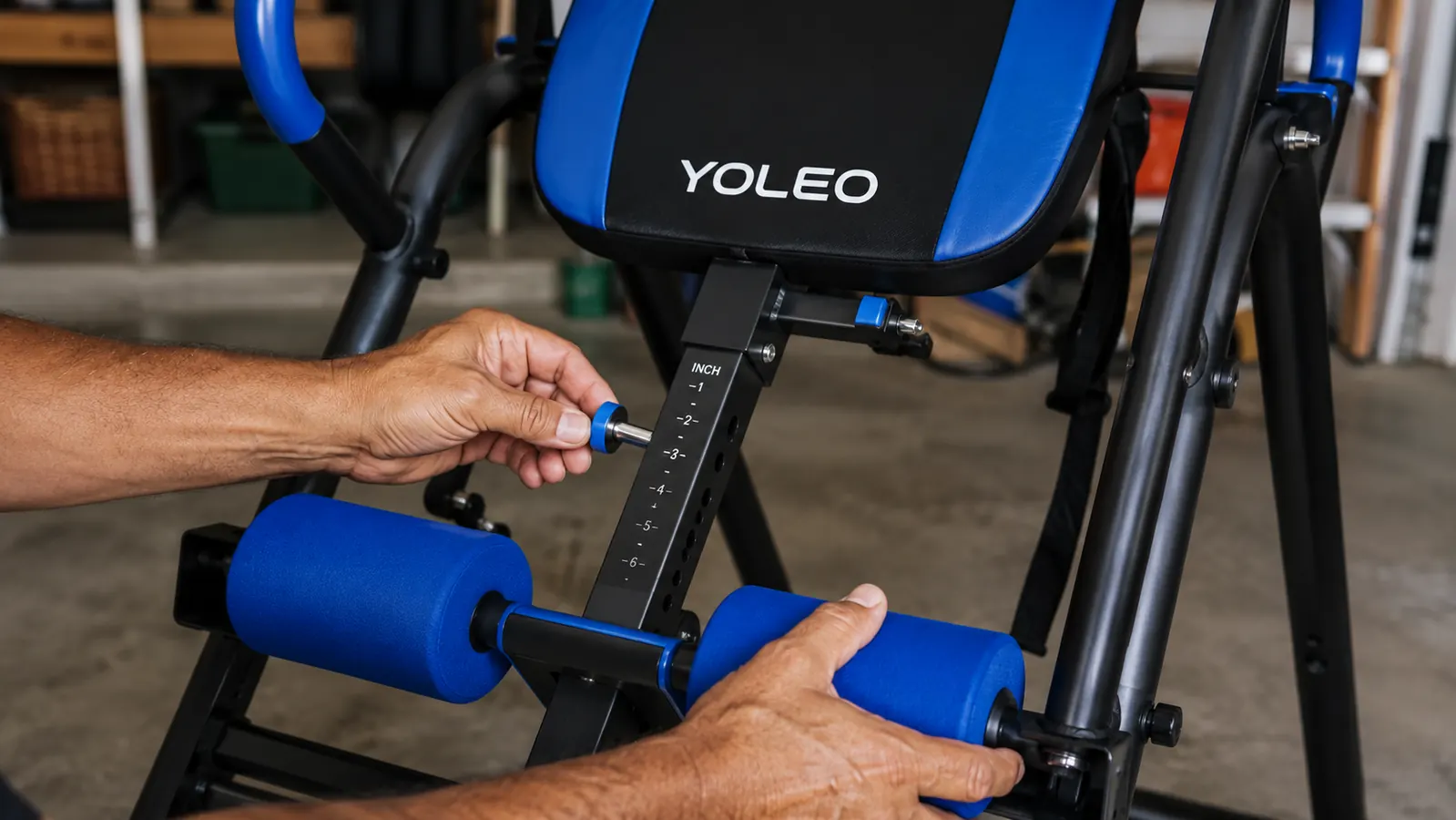
Assembly on the YOLEO took me a little over an hour working alone with a Phillips head and an adjustable wrench, bolting the base rails, uprights, and backrest together from the box. The one step that actually matters is setting the height pin to match your own height in inches, marked right on the frame. Get that wrong and the ankle cushions won't clamp your ankles securely, which is not a spot you want any slop when you're upside down. I tested mine standing upright first with the table locked flat before I ever tried a partial invert.
For your very first session, don't chase a dramatic angle. Start shallow, somewhere around 20 to 30 degrees, holding onto the frame the whole time instead of trying to invert hands-free. Your inner ear needs time to adjust to being upside down without triggering that seasick feeling, and your body needs to learn to relax into the position instead of fighting it. I skipped this advice on session two, went further than I should have, and ended up sitting on the garage step for a minute waiting for my legs to feel normal again. Start shallow. There's no prize for going further, faster, and nobody's grading you on how far upside down you get on day one.
Step 3: Time Your Decompression Session Right After a Long Shift
Timing changed everything for me. I used to invert whenever I got around to it, sometimes hours after I got home, and the results were inconsistent. Once I started using the YOLEO within about thirty minutes of walking in the door after a long shift, before I sat down and let my back settle into the couch, the sessions started doing noticeably more. Your spine is still compressed from the day right then, and that's exactly when decompression does the most work, before your muscles have had time to guard and tighten around that compressed position.
My routine now is simple. I change out of my work boots, let Diesel and Rosie out in the yard for a minute, and head straight to the garage while my back is still warm and loose from moving around all day, not stiff from sitting on the couch for an hour first. Two sessions a week became my baseline, Sunday and Wednesday nights, though on weeks with back-to-back long routes I'll add a shorter third session. Connie noticed the difference before I did, mostly because I stopped groaning every time I stood up from the dinner table.
On days when a long shift runs into overtime, that timing window still matters even more, not less. Those are exactly the days my spine needs the decompression most, and they're also the days I'm most tempted to skip it and collapse on the couch instead. I've learned to treat the session as part of clocking out, not an optional extra I'll get to if I have energy left over.
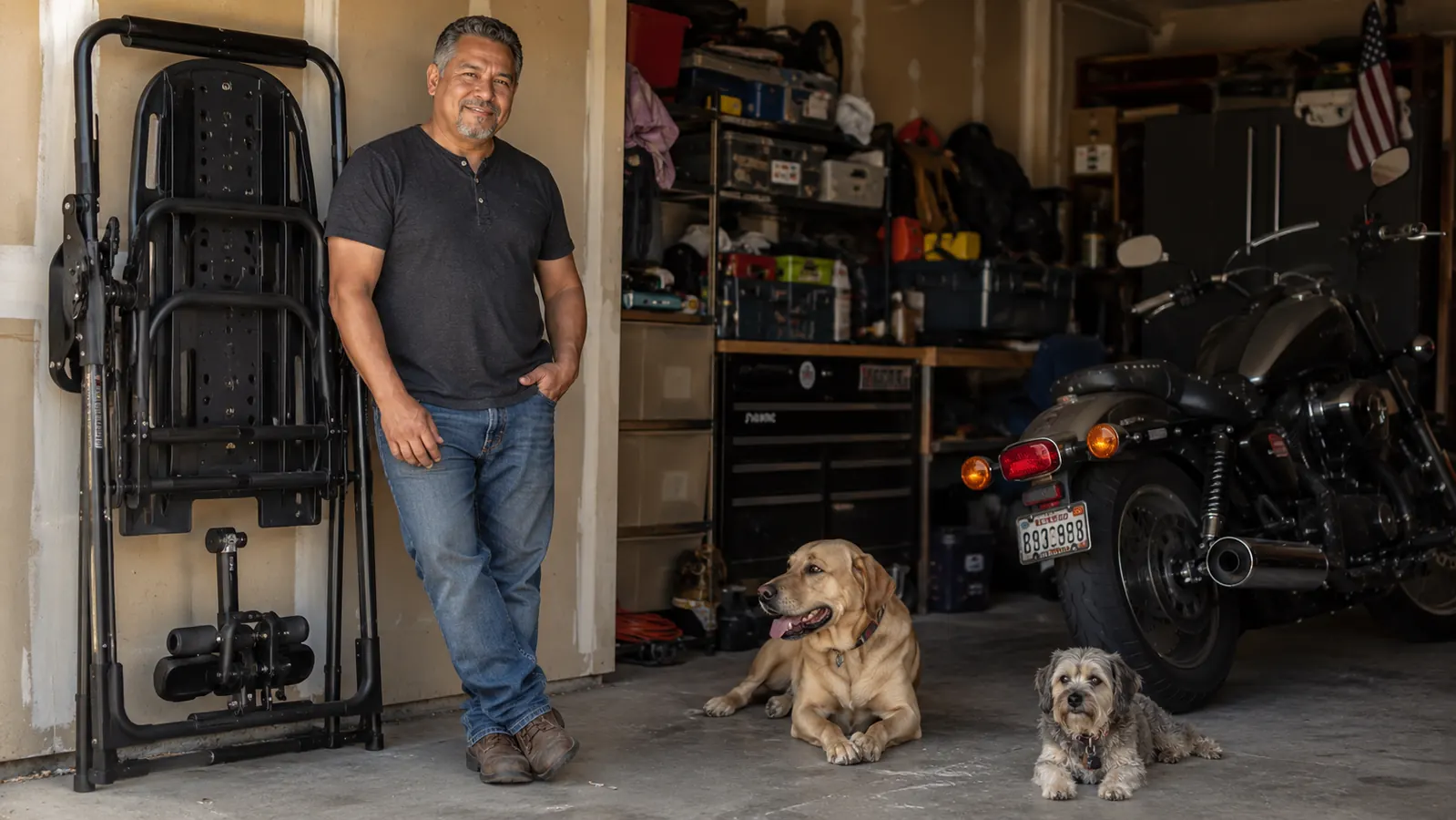
Step 4: Use the Ankle Lock and Handles Correctly Every Session
The ankle lock is the mechanism holding your entire body weight when you're inverted, so treat checking it as a non-negotiable part of every session, not a one-time setup task. I double-check the ratchet lock before I invert, every single time, out of habit more than worry, since it's never slipped once in over two years of regular use. That habit takes five seconds and it's cheap insurance against the one thing that actually matters on this piece of equipment.
The handlebars near the base give you something to pull against on your way back up to vertical, and using them is not optional if you want to protect your lower back. My first few sessions I tried muscling myself upright using just my core, and my back let me know immediately that was a bad idea. Now I grab the handles, pull myself back to standing with my arms and shoulders doing the work, and let my spine stay relaxed through the whole motion instead of straining to right itself. If something feels sharp instead of stretchy at any point, that's your body telling you to back off the angle, not push through it.
Step 5: Build the Angle and Frequency Gradually Over Several Weeks
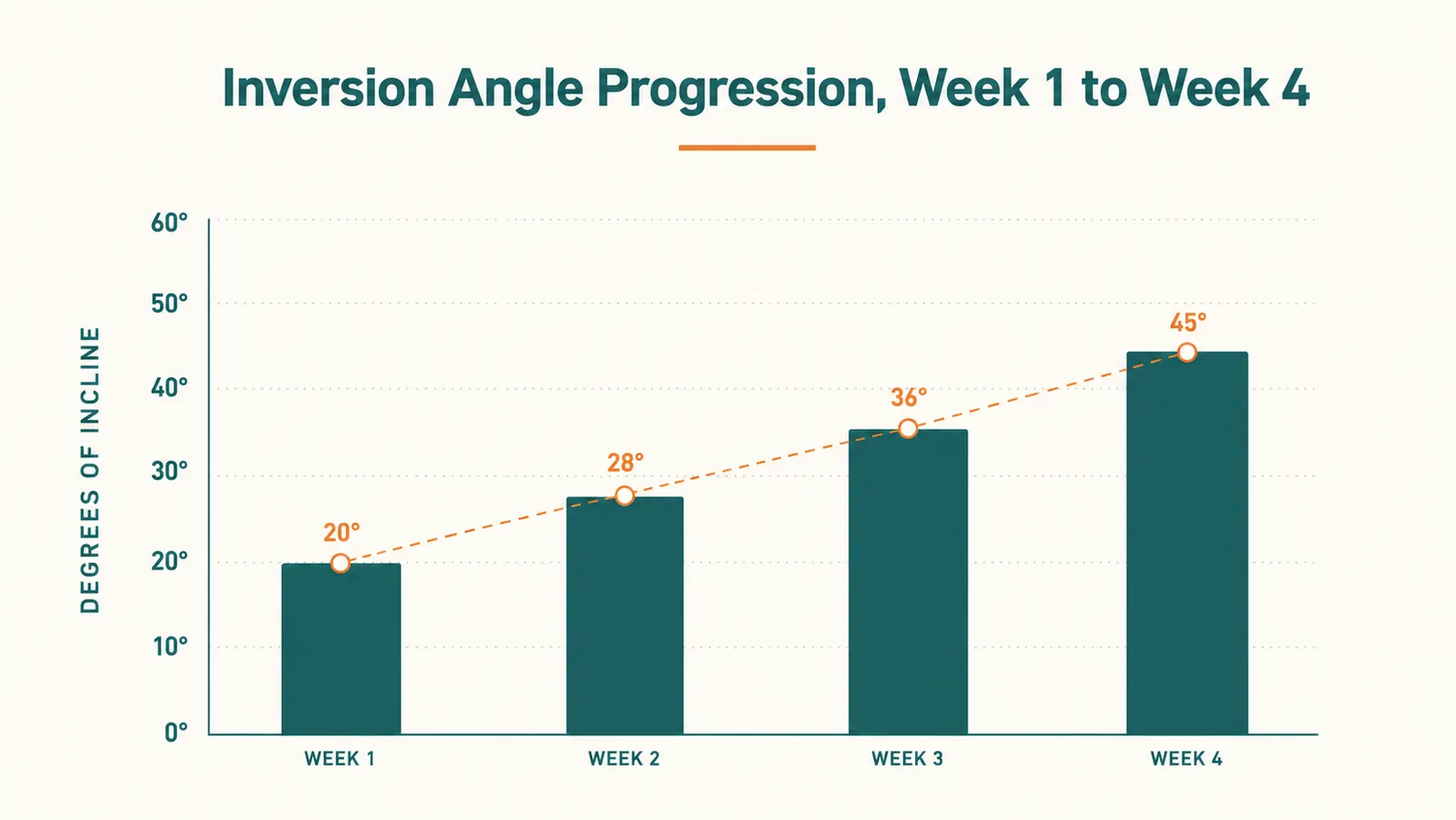
Once you've got a few shallow sessions behind you and your doctor's cleared you to continue, you can start building up, both in angle and in how long you hold each session. I moved from that first 20 to 30 degree range up toward 40 to 50 degrees over roughly four weeks, adding a little at a time rather than jumping straight to a steep incline because it felt like it should work faster. I still don't go past about 50 degrees. I'm not chasing a full 180-degree hang like the marketing photos show, and honestly, most people don't need to.
I track a rough after-shift stiffness number, just a one to ten gut check jotted on the kitchen calendar, so I'm not relying on memory after a double shift, which is never reliable. Week one I was hovering around a 7 most evenings after work. By week four that number had dropped closer to a 3 or 4, and the angle had climbed right alongside it. Let your own stiffness score, not a calendar date, decide when you're ready to add angle or frequency. Rushing this step is how people end up sore and quitting an inversion table routine after two weeks instead of sticking with it long enough to feel the real change.
Session length crept up the same slow way. I started at maybe two minutes at a shallow angle, and now I'll do two rounds of four minutes each at my usual 40 to 50 degree range. There's no rule that says longer is automatically better, so I stopped once four minutes started feeling like plenty rather than pushing toward some arbitrary number I saw in a forum somewhere.
What Else Helps
The inversion table handles the worst of the daily compression, but it's not the only thing keeping my spine from tightening right back up between shifts. I make a point of getting up and moving around the bus depot break room instead of sitting through my whole break, since staying in one compressed position for the entire shift undoes some of what the previous session's decompression bought me. Walking Diesel and Rosie after dinner, even just around the block, keeps my hips and lower back from stiffening up again once the evening session is done. A few coworkers on my route swap similar notes, warehouse guys and delivery drivers doing roughly the same thing, the table for the acute compression and a handful of boring daily habits to keep it from piling back up overnight.
Drinking more water during my shift made a bigger difference than I expected too, since dehydrated discs seem to handle a long shift worse than well-hydrated ones do. None of that replaces the inversion table. It's more that the sessions work better when the rest of the day sets your spine up for them instead of fighting against them the whole time.
I'm not chasing a full flip upside down. I'm chasing a spine that isn't two inches shorter by the time I clock out, and this routine has earned that.
Two Years, Two Sessions a Week, One Spine That Finally Gets a Break
If long shifts leave your back compressed and stiff by the end of the day, here's the exact YOLEO inversion table I've built this whole routine around.
Amazon Check Today's Price on Amazon →