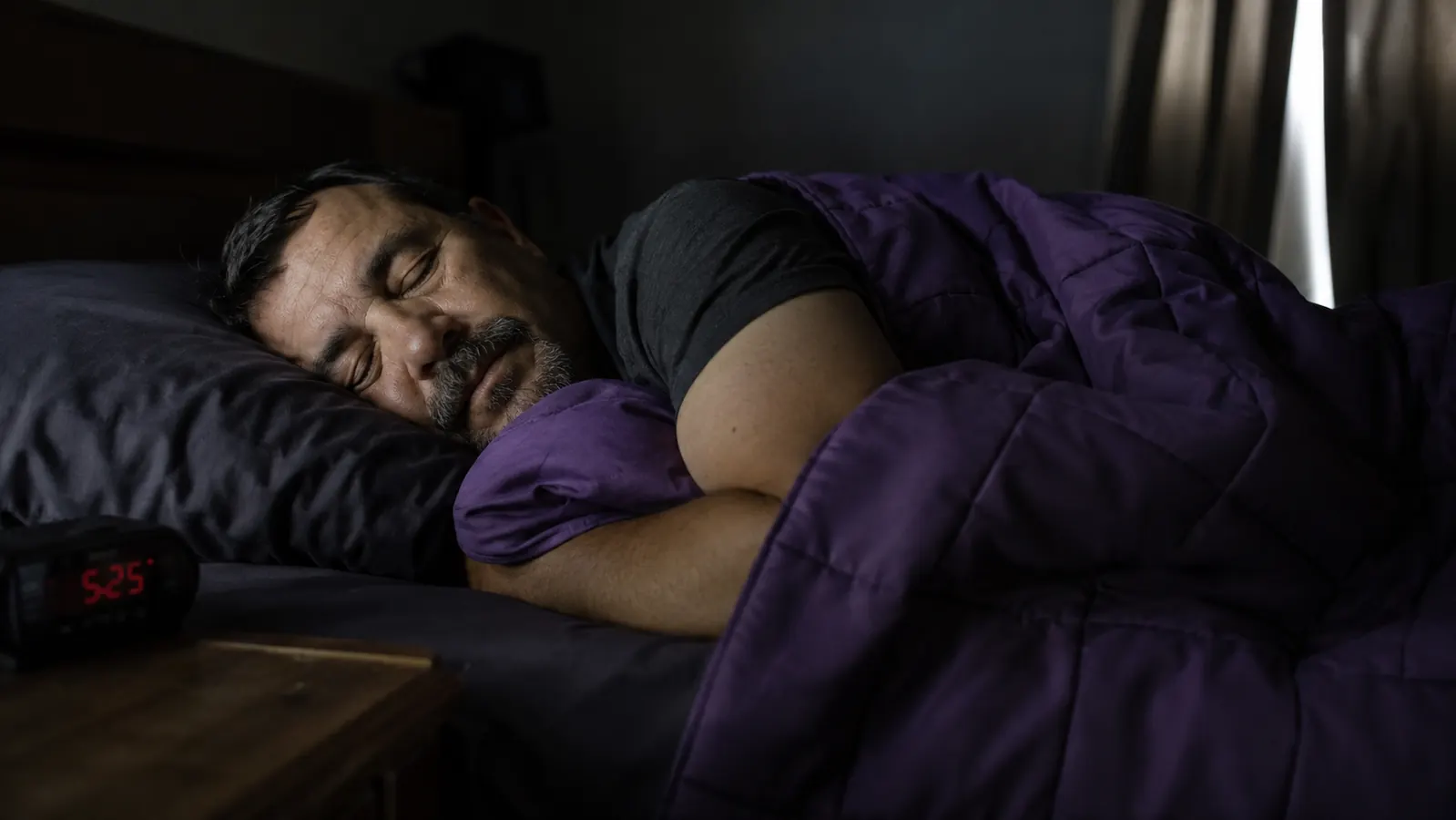
I've driven a city bus for 22 years, and for the last several of those my start time has been 4:40 a.m. That means my alarm goes off at 3:45, which means my body never really settles into a normal sleep rhythm the way Connie's does. She's down by 10 and up at 6:30 like clockwork. I'm asleep by 8:30 most nights trying to squeeze in seven hours before the alarm wrecks it, and for a long stretch of last year, I wasn't sleeping through those seven hours at all. I'd wake up at 1, wake up again at 3, and drag myself out of bed at 3:45 feeling like I'd barely closed my eyes.
Connie tried the melatonin gummies first, then a sound machine, then blackout curtains, and each one helped a little without fixing the actual problem, which was that I couldn't stay asleep. A guy on my route, drives the same shift on weekends, mentioned he'd started using a yescool weighted blanket and it was the first thing in years that got him through a night without waking up checking the clock. I was skeptical, I'll say that up front. A blanket with glass beads sewn into it sounded like the kind of thing that gets hyped online and does nothing once it's actually on your bed. I ordered the yescool 20 pound anyway, figured fifty some dollars wasn't much to lose if it did nothing, and six months later it hasn't left my bed once.
The Quick Verdict
A genuinely effective sleep tool for anyone whose schedule fights their body clock, with real cooling performance and a weight that actually settles you, once you get past the learning curve of sleeping under 20 pounds.
Amazon Check Today's Price →Waking Up Every Two Hours Before Your Shift Even Starts?
If your body clock is fighting your work schedule and you're stringing together broken four-hour stretches of sleep, this is the exact blanket I've slept under every night for six months to actually stay asleep.
Amazon Check Today's Price on Amazon →How I've Used It
My routine hasn't changed much in six months, which I think is part of why it worked. I go to bed around 8:15, blackout curtains closed, sound machine running low, and the yescool pulled up to my chest the same way every night. I picked the 20 pound version because I'm 5 foot 11 and sit around 215 pounds, and the sizing chart on the listing puts that weight in the right range for someone my size. Connie sleeps under her own lighter blanket on her side of the bed, we didn't try to share one, and I'd tell anyone married to a normal sleeper to do the same rather than fight over a single blanket that's really built for one body.
The first week was an adjustment, and I won't pretend otherwise. Twenty pounds is noticeable the second you lie down, and turning over takes a beat longer than it used to because the blanket doesn't just flip with you, you have to sort of resettle it. By night four or five that stopped registering as a problem and started feeling like part of falling asleep, almost like the weight was a cue that it was time to shut off.
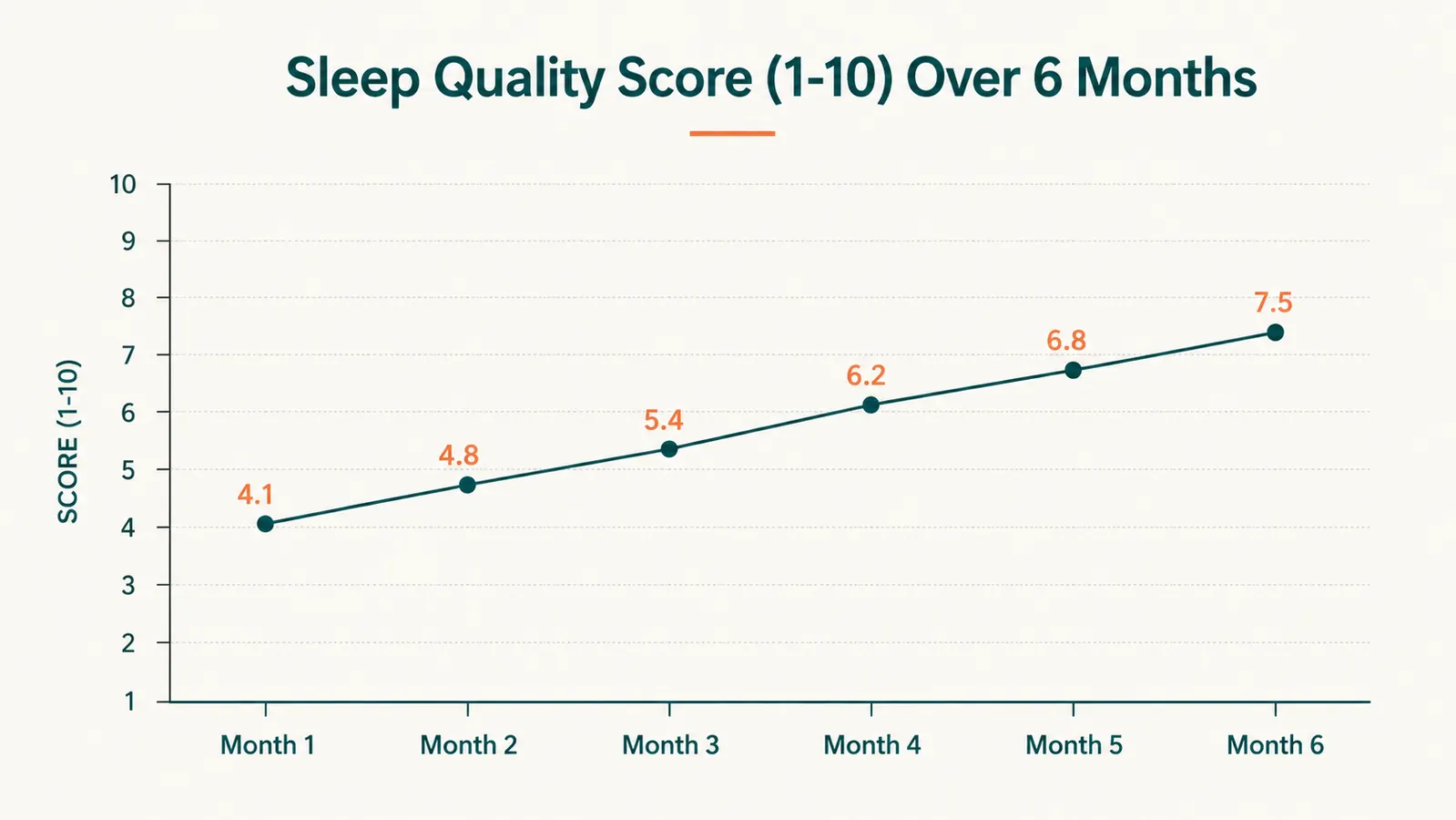
I started keeping a rough sleep log on the kitchen calendar, Connie's idea again, just a 1 to 10 gut check each morning on how rested I felt and a note if I remembered waking up in the night. Nothing scientific, but after six months of daily entries it's the clearest picture I've got of what actually changed, and it's what most of this review is built on.
The Glass Beads vs Poly Pellets, and Why Weight Distribution Matters
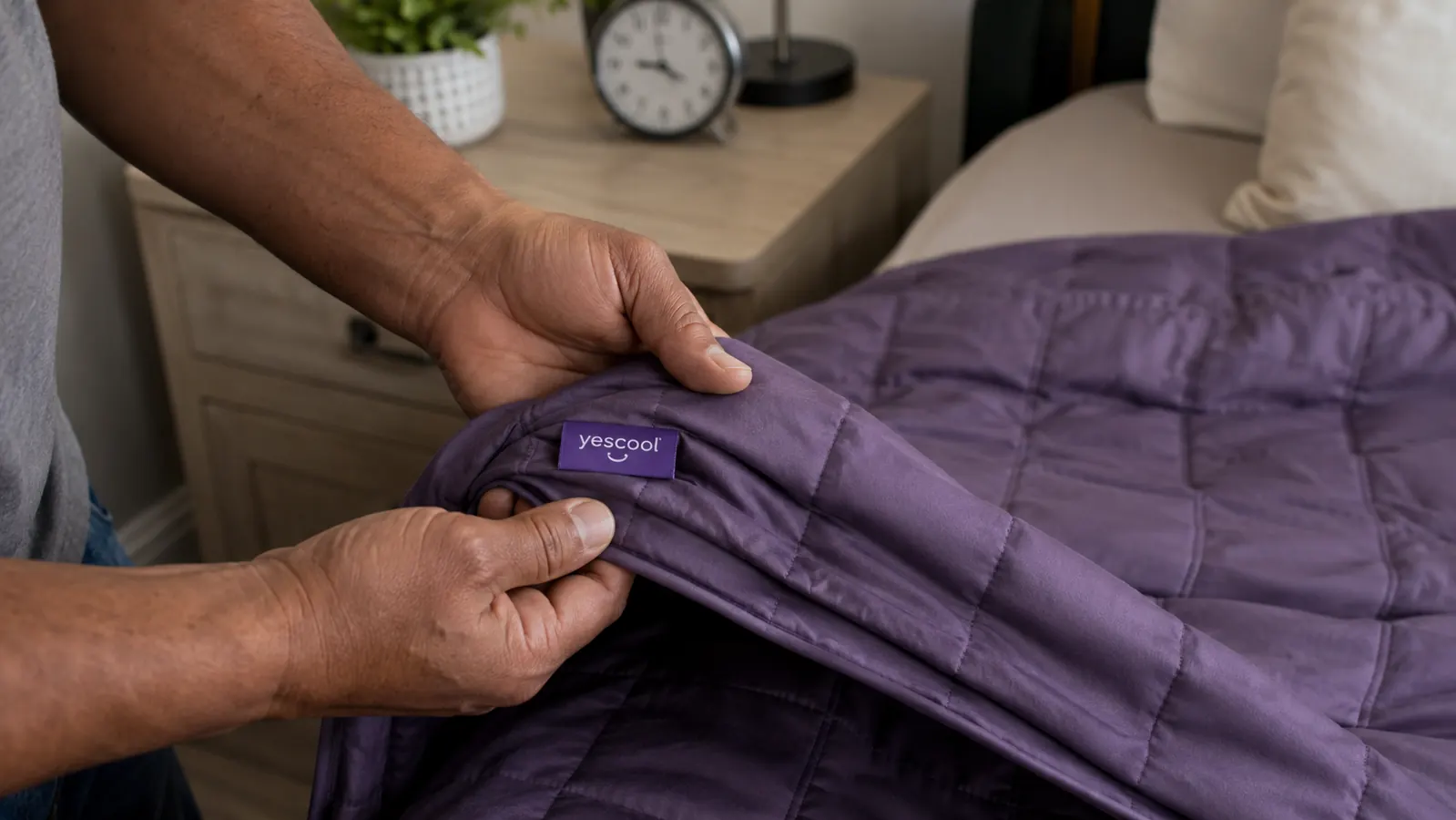
Before I bought this one I read up on the difference between weighted blankets filled with plastic poly pellets and ones filled with fine glass beads, because I didn't understand why it mattered until I felt it. Poly pellets are bulkier, so a blanket needs bigger pockets and the weight ends up sitting in clumps that shift around as you move. The yescool uses glass beads, which are smaller and denser, so the same 20 pounds spreads across a grid of smaller quilted squares instead of a handful of big ones.
What that means in practice is the weight feels even across your whole body instead of concentrated in a few spots. I don't get that thing where one shoulder feels crushed and the other feels like nothing, which is what happened with a cheaper poly pellet blanket Connie's sister lent us to try first. That one went back in a box after four nights. The yescool's grid stitching keeps the beads from migrating toward the foot of the bed too, which was my other worry going in. Six months of nightly use and washing, the fill is still distributed the same as night one.
The stitched squares are small enough, maybe 6 by 6 inches, that even when I bunch the blanket up during a restless stretch, I don't end up with a bare patch on one side and doubled-up weight on the other. That sounds like a small detail until you've slept under a blanket that doesn't do it right.
Does It Actually Sleep Cool
This was my biggest doubt going in. I run warm, especially in the first hour after I lie down, and the idea of 20 pounds of anything on top of me in a bedroom that isn't heavily air conditioned sounded like a recipe for waking up soaked. Our bedroom sits in the high 60s most nights, low 70s in summer if the AC is behind, and I've slept under the yescool through both seasons now.
The outer fabric is a tight, slightly cool-to-the-touch weave, not the fuzzy minky material some weighted blankets use, and that's the whole reason it doesn't trap heat the way I expected. I still run warmer under it than under a plain sheet, that's just physics with 20 extra pounds on you, but it's nowhere near what I braced for. Winter months I don't notice heat at all. Summer, on the warmer nights, I'll occasionally kick a leg out from under the edge, same as I would under a regular comforter, and that's been enough to manage it.
What I didn't expect is that the glass beads themselves seem to help. They don't insulate the way a thick poly fill does, so the blanket doesn't feel like it's holding heat in a way a fluffy comforter does. I wouldn't call it a cooling blanket in the sense of feeling cold to the touch all night, but it's not the sweat trap I was bracing for either. That difference between marketing language and lived reality matters, and on this one the marketing came closer to true than I expected.
Six Months of Early Mornings: What Changed in My Sleep
That sleep quality number I mentioned earlier started around a 4 most mornings in month one, which lines up with how I actually felt, groggy, resentful of the alarm, needing two cups of coffee before I trusted myself behind the wheel. By month three it was sitting closer to 6. By month six it's holding around 7 to 7.5 on a normal week, and it only drops back down after a stretch of overtime or a late family dinner that pushed my bedtime off schedule.
The bigger shift isn't the number, it's what stopped happening. I used to wake up flat, fully alert, somewhere between 1 and 3 a.m. most nights, and once I was awake it could take twenty minutes to drift back off, twenty minutes I couldn't afford with a 3:45 alarm already looming. Under the yescool, those middle-of-the-night wake-ups still happen, I'm not going to tell you they stopped completely, but they've dropped from four or five nights a week to maybe one. And when they do happen now, I'm back asleep in a few minutes instead of lying there doing math about how many hours I have left.
The knock-on effect showed up somewhere I didn't expect, my afternoons. I nap most days between shifts, an hour or so before the evening portion of a split shift, and I used to come out of those naps groggier than when I went in. Since the blanket, and since the actual overnight sleep improved, those naps feel like they're topping off something that's already mostly full instead of trying to make up a real deficit.
What I'd Have Done Differently
If I could go back, I'd have sized down. The 20 pound version is right at the top of what the yescool sizing chart recommends for my weight, and there were a couple weeks in month two where I genuinely wondered if I'd have adjusted faster to a 17 or 15 pound version instead. It still worked, and I've stuck with it because I didn't want to buy a second blanket to test a theory, but if you're closer to 180 pounds than 210, I'd size down rather than round up like I did.
I also underestimated how much the machine washing instructions actually matter. The yescool's cover and the weighted insert can both go through the wash, but you need a machine that can handle the bulk, ours is a standard top-loader and it manages fine, though I run it on its own load rather than mixing it with regular laundry. Washing it once a month has kept it from smelling or matting down, and it's come out of the dryer on low heat each time without the beads clumping. I'd have read that section of the care instructions more carefully before the first wash instead of just tossing it in and hoping.
The other thing worth naming honestly, this isn't a fix for a mattress or pillow that's actually the problem. I replaced a flat, worn-out pillow around the same time I started using the blanket, and I genuinely can't tell you how much of the improvement is the pillow versus the blanket versus just being more consistent about my bedtime routine overall. What I can tell you is the combination works, and the blanket earned its spot by staying in rotation every single night for six months when plenty of other things I've tried got shelved after a few weeks.
What I Liked
- Glass bead fill distributes weight evenly instead of clumping in one spot
- Outer fabric sleeps noticeably cooler than a minky-covered weighted blanket
- Both cover and insert are machine washable and have held up through monthly washes
- Fewer middle-of-the-night wake-ups on a shift schedule that fights normal sleep
- 20 lb size worked reliably for someone in the 190-210 lb sizing range
Where It Falls Short
- Turning over under 20 pounds takes real adjustment for the first week or so
- Runs warmer than a plain sheet in summer even with the cooling fabric
- Sizing down might have been the smarter call for faster adjustment
- Needs its own wash load, not something you toss in with regular laundry
I'm not chasing eight perfect hours. I'm chasing not waking up at 2 a.m. doing math about how many hours I have left, and this blanket has earned that.

Who This Is For
If your work schedule fights your body's natural clock, early starts, overnight shifts, rotating schedules, and you're waking up in the middle of your sleep window more nights than not, this is worth trying. It's also a solid fit for anyone whose body aches from a physical job by the time they lie down, drivers, nurses, warehouse and trades folks, since the even pressure has a calming effect that's separate from whatever's sore. Connie's started borrowing mine on her worst insomnia nights and has come around on it too, even though she sleeps a normal schedule.
Who Should Skip It
Skip it if you share a bed and both sleep under one blanket, weighted blankets are built for one body's weight range and don't work well split between two people. It's also not a fit if you're claustrophobic or genuinely dislike the feeling of pressure while you sleep, some people try it once and hate it, and that's a real reaction, not something you push through. And if you run hot no matter what's on the bed, even a well-ventilated weighted blanket adds heat you'll have to manage with a fan or lighter sheets underneath.
Six Months, One Body Clock That Finally Cooperates
If broken sleep is undoing whatever recovery you're trying to get on your days off, here's the exact yescool blanket I've slept under every night since my sleep log started.
Amazon Check Today's Price on Amazon →