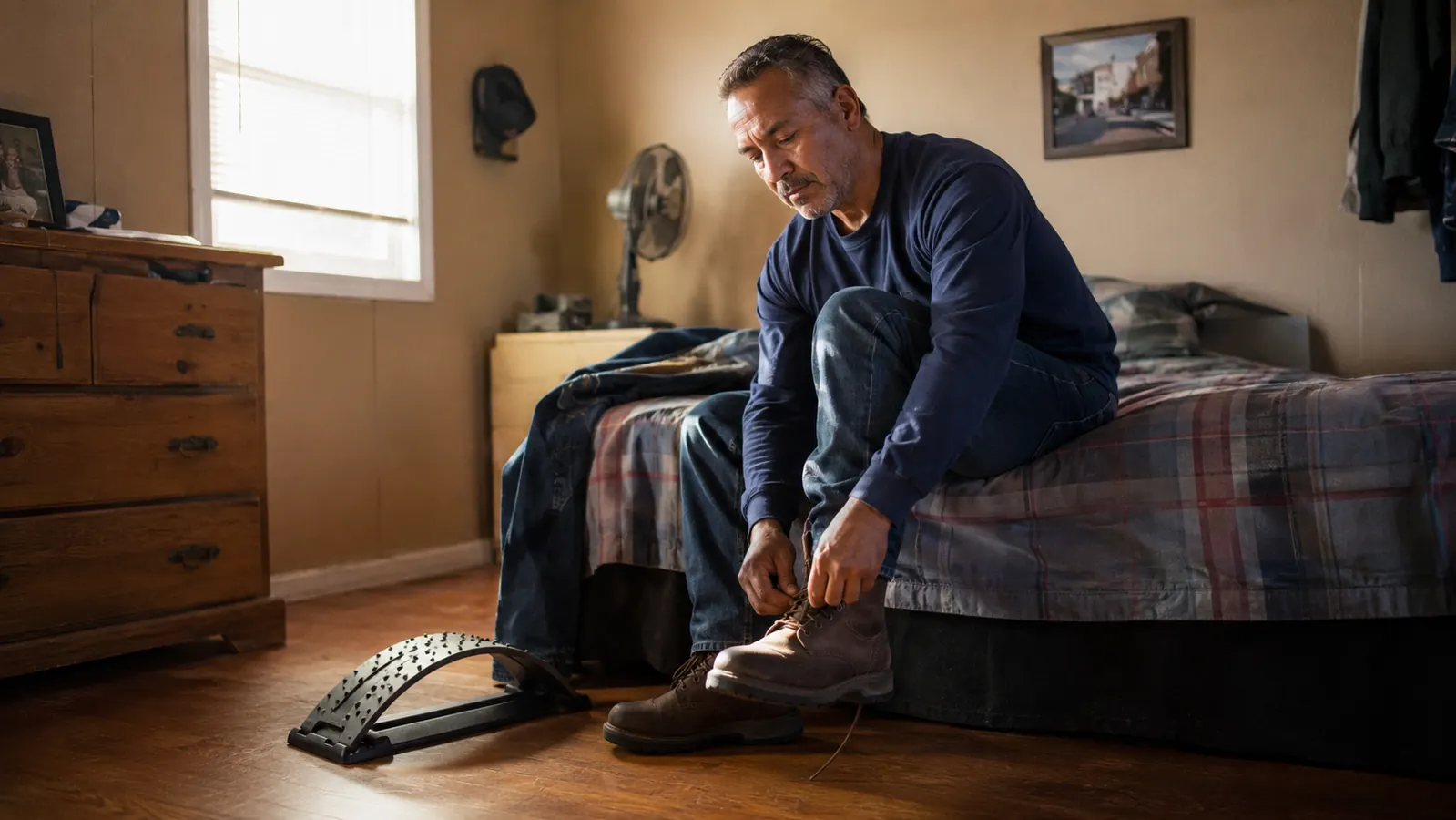
Twenty-two years behind the wheel of a city bus does something to your spine that no amount of complaining fixes. By my late forties I was rolling out of bed every morning like a rusted gate, hands braced on the mattress, waiting for my lower back to decide it was willing to hold my weight. I tried stretching on the floor. I tried a rolled-up towel under my back. Neither one gave me the deep, even arch I actually needed, so I started looking at adjustable back stretcher arcs, the kind that let you dial in how far your spine bends instead of just lying on a fixed curve.
Two names kept coming up in every forum thread and Amazon review section I checked: MINOLL and Nayoya. I bought both, used each one for three straight weeks on my mornings off from routes, and paid close attention to which one actually loosened my lower back before a ten-hour shift and which one just sat in the closet looking like a good idea. The short answer, if you're standing in your kitchen with two tabs open on your phone right now, is that the MINOLL back stretcher wins for anyone who needs real adjustability and a frame built to take daily use. Nayoya isn't a bad product, and I'll tell you exactly where it still earns a spot below, but for a guy whose back needs a different stretch depth depending on the day, MINOLL's five-level arch is the one that stayed on my bathroom floor instead of a drawer.
| Feature | MINOLL | Nayoya |
|---|---|---|
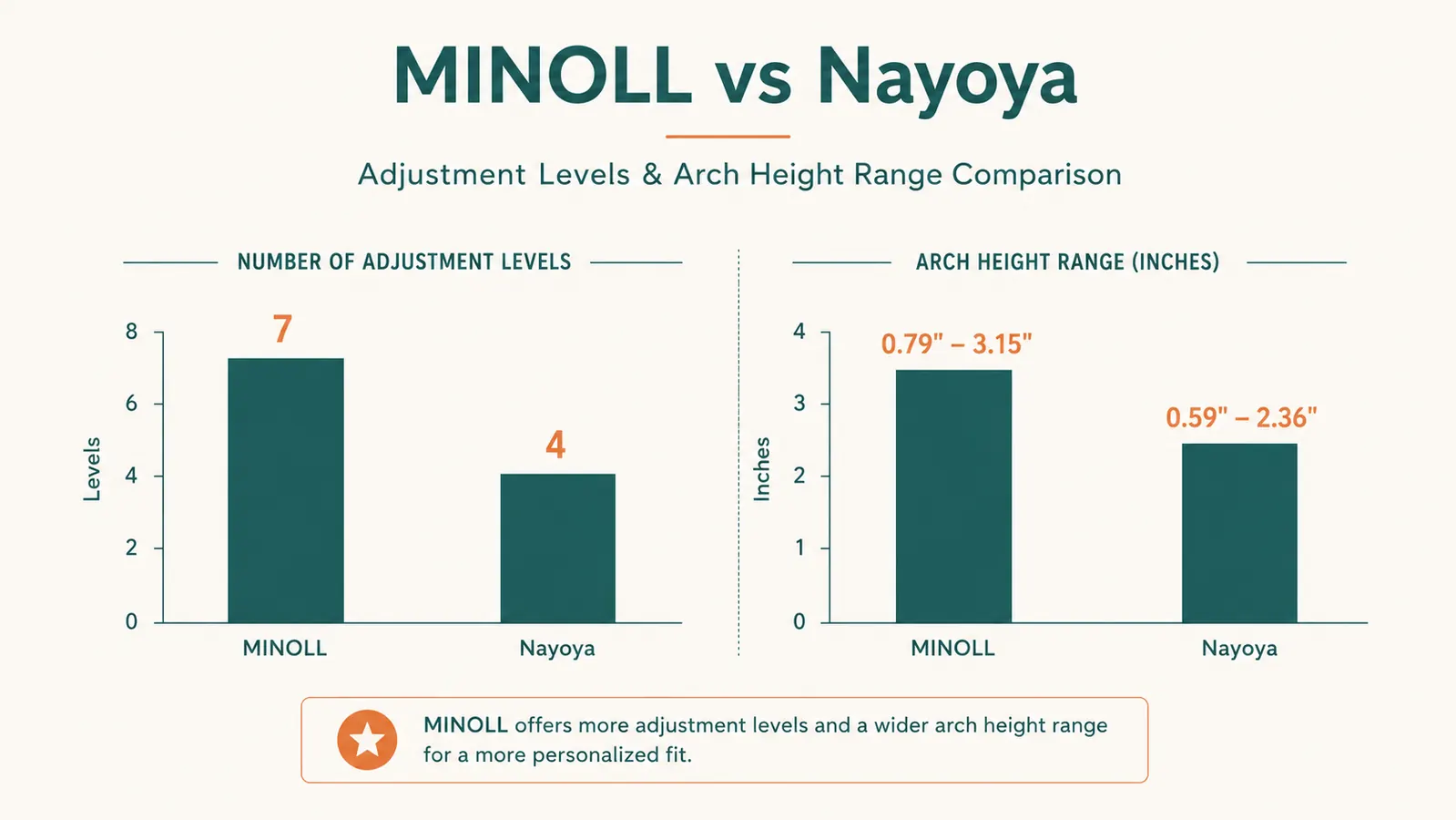
| Adjustment Levels | 5 distinct levels, roughly 4 to 12 inches of arch height | 3 fixed arch positions, no in-between settings |
| Frame Material | Rigid ABS shell with a textured, no-slip base | Lighter ABS shell, smoother base that can slide on hardwood |
| Best Use Case | Daily users who want to progress the stretch deeper over weeks | Occasional users who want one simple, set stretch |
| Stability on Tile or Wood | Wide, textured footprint stayed planted under my weight | Lower profile shifted a few times on my bathroom tile |
| Storage & Portability | Stacks slightly taller when broken down | Nests flatter, easier to slide under a bed or seat |
| Price Today | Check today's price on Amazon | Comparable price range, sometimes a few dollars more |
| Who It's Better For | Chronic lower back stiffness that changes day to day | Light, occasional stretching without any adjusting |
Where MINOLL Wins
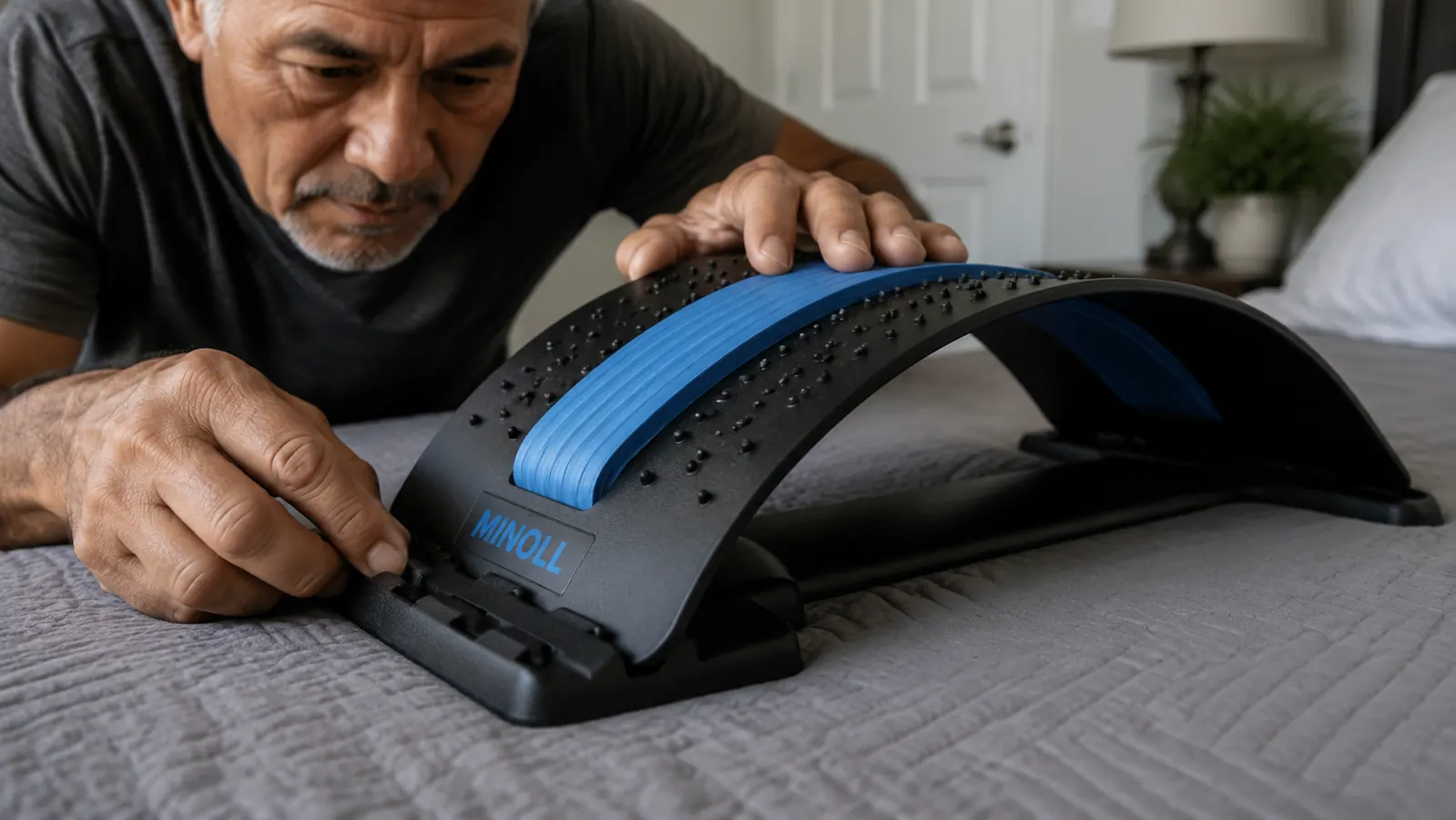
The adjustability is the whole story with the MINOLL. My back doesn't feel the same on a Monday after two days off as it does on a Friday after five straight ten-hour shifts. Some mornings I need level two, just enough to take the edge off. Other mornings, usually after I've been sitting in that driver's seat for what feels like a week straight, I need level four or five to actually get a stretch deep enough to feel my spine let go. Nayoya doesn't give you that middle ground. You get three fixed positions and that's it, which means you're either undershooting or overshooting depending on the day, and neither one felt as dialed in as MINOLL's five steps.
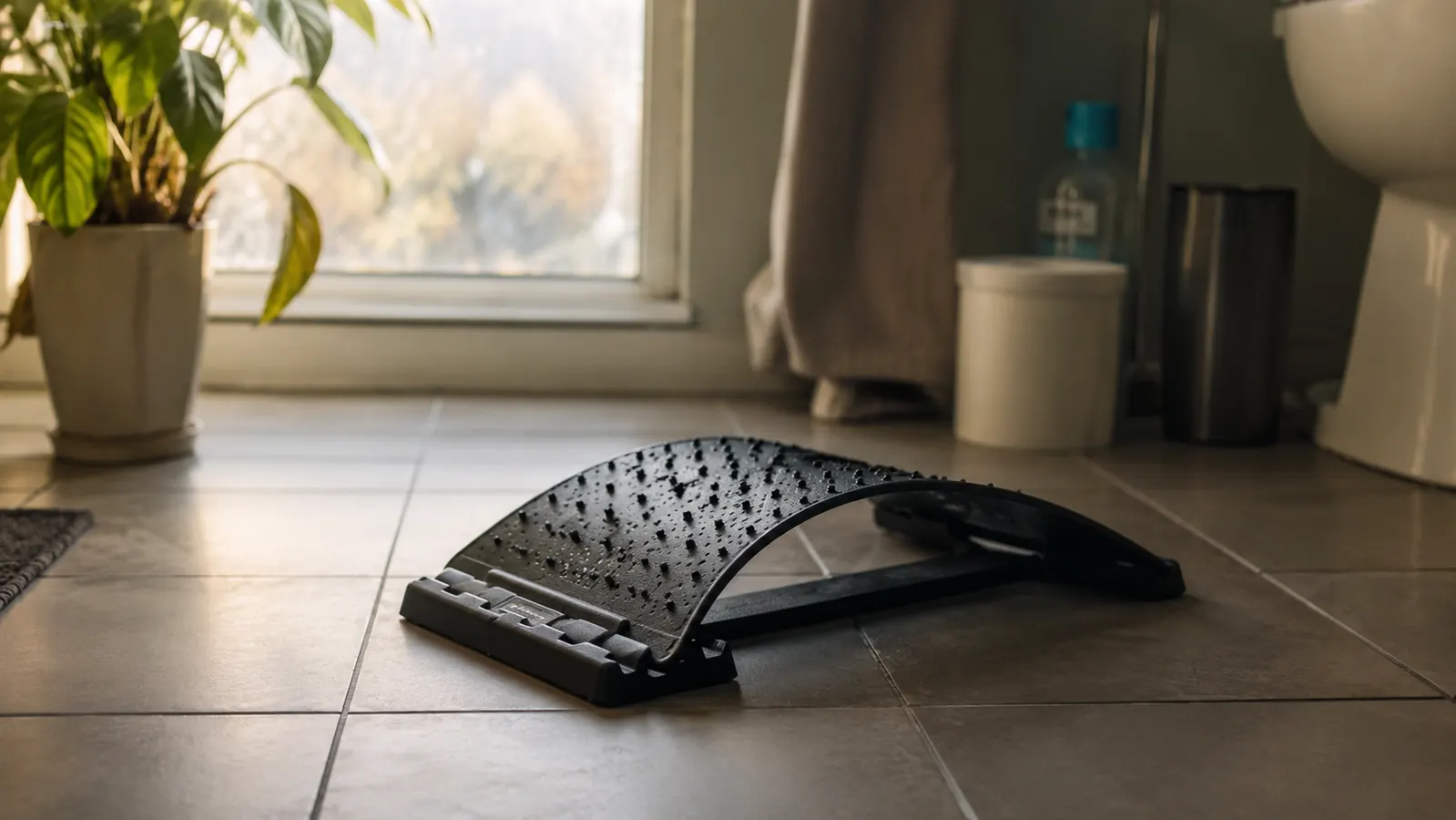
Build quality made a real difference too, and I didn't expect it to matter this much when I first unboxed both of them. The MINOLL has a wider base with actual texture molded into the plastic, so when I set it on my bathroom tile at five in the morning, half asleep, it stayed exactly where I put it. The Nayoya has a smoother, lower-profile base that slid an inch or two on that same tile more than once, which is not what you want when you're easing your full weight onto an arc under your lower spine. At 210 pounds, I also noticed the MINOLL held its shape under my weight through all three weeks without any give in the hinge points, while the Nayoya felt a touch softer by week three.
Where Nayoya Wins
I want to be straight with you here, because this isn't a one-sided writeup. If you don't have chronic stiffness and you just want something simple to stretch on a few times a week without thinking about it, Nayoya's fixed positions remove the guesswork entirely. There's no dial, no level pegs to fuss with in the dark before your alarm goes off twice. You set it down, you lie on it, you're done. For somebody easing into back stretching for the first time, that simplicity has real value, and I'd never talk a first-timer out of starting there if that's what they already own.
Nayoya also nests flatter for storage, which matters more than people think if you're working out of a small apartment or a truck cab with limited floor space. My cousin drives long-haul and keeps a Nayoya wedged behind his sleeper seat because it slides into a gap the MINOLL is just a bit too tall to fit into once you've adjusted it up a level. If your main use case is tossing it in a bag or a cab and you're not chasing progressive depth, that's a legitimate reason to lean toward Nayoya over MINOLL.
Your back doesn't stretch the same every day. Your back stretcher shouldn't either.
If your lower back stiffness changes depending on the shift you just worked, the fixed arch on a basic stretcher only gets you halfway there. MINOLL's five adjustment levels let you start shallow and work deeper as your back loosens up, without buying a second product later.
Amazon Check Today's Price on Amazon →How I Tested Both, Morning by Morning
I didn't want to just eyeball this, so I kept it simple. Three weeks on the MINOLL first, three weeks on the Nayoya after, both used first thing in the morning before I got dressed for my route. Before each session I rated my lower back stiffness on a scale of one to ten, sitting up on the edge of the bed. After a five-minute stretch on whichever arc I was testing that week, I rated it again. I wrote both numbers down on a notepad on my nightstand, nothing fancy, just enough to keep myself honest instead of trusting my memory a month later.
On the MINOLL, my average stiffness dropped from about a seven before stretching to a three or four after, and I could push that lower on the mornings I bumped up a level. On the Nayoya, I saw a similar drop on lighter stiffness mornings, but on the mornings I really needed the deeper stretch, the fixed top position just didn't get me as far down. That gap showed up most clearly after back-to-back double shifts, which is exactly when I needed the most relief and got the least out of a stretcher that couldn't adjust further.
Build Quality After Three Weeks of Daily Use
Plastic back stretchers take a beating even though they don't look like it. Every session puts your full body weight through a hinge and a curved arch, day after day. By the end of my three weeks on the Nayoya, I noticed a slight creak in the hinge that wasn't there when it came out of the box, and the base had picked up a faint scuff from sliding on the tile. The MINOLL, by comparison, still felt exactly like it did on day one. No creak, no give, no sliding, even after the same number of sessions and the same amount of weight going through it.
Weight capacity is worth mentioning too if you're built like me and not like the models in the product photos. The MINOLL's listing puts its rated capacity noticeably higher than the Nayoya's, and that tracked with what I felt using it. I never once wondered if I was pushing the MINOLL past what it was designed for. On the Nayoya, especially on the higher fixed position, I occasionally felt like I was closer to the edge of what that lighter frame was built to handle.
One Thing I'd Warn You About With Either One
Whichever arc you end up with, don't do what I did the first morning I unboxed the MINOLL and jump straight to the highest level because you're impatient and your back hurts. I did that, felt a sharp pull instead of a stretch, and spent the next two days more sore than when I started. Start at the lowest level on either product, give your lower back thirty seconds to settle, and only move up a level every few days once your body has adjusted. This isn't a device where more arch automatically means more relief. It means more force through a spine that's been locking up for years, and it deserves to be eased into.
Once I started treating it that way, week two and three went a lot better on both products, and it's a big part of why I ended up preferring MINOLL. Being able to move up in smaller, five-level steps instead of jumping straight from Nayoya's low position to its high one let me find the exact depth my back could handle on any given morning, instead of guessing between two extremes.
Price and Long-Term Value
Neither of these is a big-ticket purchase, and the gap between them at checkout is usually small enough that price shouldn't be the deciding factor on its own. What matters more is what you're getting for that money over the life of the product. I paid close to the same amount for both, and after three weeks I'd already gotten more consistent use out of the MINOLL simply because it fit whatever my back needed that particular morning. A product you actually reach for every day is worth more than a product that's a few dollars cheaper and ends up under the bed by week two.
There's also the replacement question, which nobody thinks about until they're dealing with it. A stretcher with a hinge that's already creaking after three weeks, like the Nayoya was for me, is one I'd expect to need replacing sooner. The MINOLL's tighter, more solid construction is the kind of thing that pays you back a year from now when you're not shopping for a second one. If you're checking today's price on Amazon for either, factor in that a slightly higher upfront cost on the MINOLL is buying you a frame that's built to outlast a basic fixed-arch design.
Who Should Buy Which
If your lower back stiffness is a daily grind that changes depending on how your shift went, and you want one product that can grow with you as your back loosens up over months instead of days, get the MINOLL. It's the one built for exactly that kind of inconsistent, real-world stiffness, and it held up better through three straight weeks of daily use than the Nayoya did. If you only need a light stretch a couple times a week, don't care about fine-tuning the depth, and storage space is genuinely tight, Nayoya can still do a job for you. But for anyone reading this because their back feels like mine did after twenty-two years of driving, adjustable and durable beats simple and fixed every time I tested it.
Stop guessing at one fixed stretch and start dialing in the one your back needs today.
Five adjustment levels, a base that stays planted, and a frame that held up through three weeks of daily testing without a single creak. That's what earned the MINOLL the win in this comparison.
Amazon Check Today's Price on Amazon →